
Roofing blog
Buying or Selling a Livingston County Home With an Aging Roof
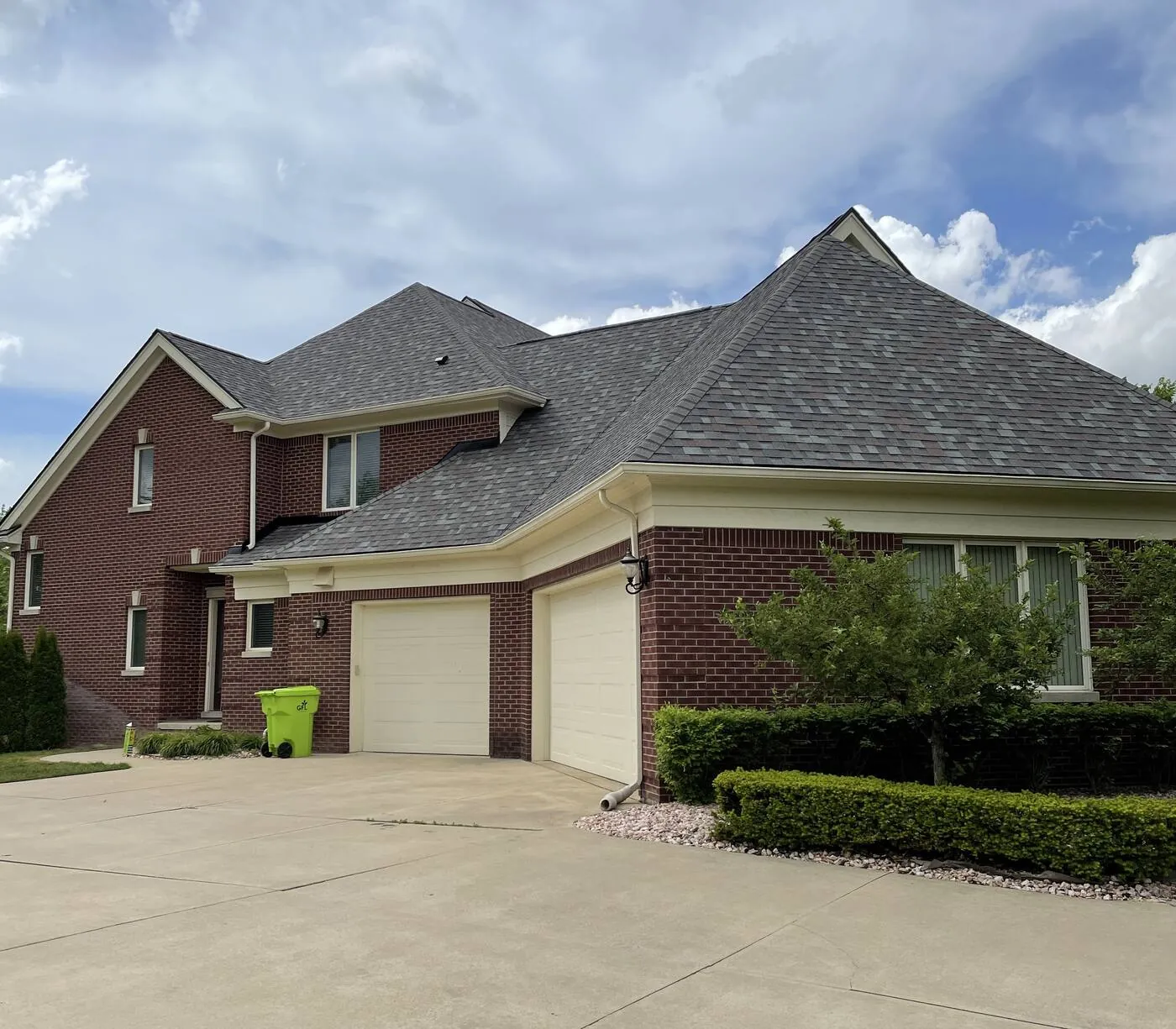
A roof is the item most likely to stall a real estate transaction in this county, and it is the item people are least prepared to discuss when it comes up. The inspection report lands, the roof gets flagged, and suddenly two parties who had a deal are negotiating about something neither of them understands well. This is a practical guide to that conversation from the roofing side, whether you are listing a home in Brighton or writing an offer on one in Hartland.
Why so many Livingston County roofs come up in transactions right now
Timing. An enormous share of the county's housing stock went up in one burst. The median home in Howell, Oceola, Marion and Genoa Townships dates to the mid-to-late 1990s, and in Howell Township roughly a quarter of all homes were built between 2000 and 2009. Those homes went on with builder-grade three-tab shingles, which last about fifteen to twenty years in this climate. Do the arithmetic and a very large number of Livingston County homes are either on their first replacement now or overdue for it.
That means an aging roof is not an unusual defect here. It is the expected condition of a house of a certain age, and treating it as a scandal on either side of the table is the fastest way to lose a deal that should have closed.
What a home inspector can and cannot tell you
General home inspectors are good at what they do, and roofing is a small slice of it. Many inspect the roof from a ladder at the edge or from the ground with binoculars, and many will not walk a steep slope, a wet slope, or a slope in winter — reasonably, because it is not safe. Their reports commonly say some version of "roof at or near the end of its expected service life, recommend evaluation by a licensed roofing contractor."
That sentence is not a finding. It is a referral. It does not tell you whether the deck is sound, whether the flashing at the chimney is failing, whether the ventilation is causing the problem, or whether the roof has two years left or ten. Both buyers and sellers routinely negotiate hard in either direction off a sentence that was written specifically to say "I do not know, ask a roofer." Get the roofer.
If you are selling
Know the answer before the buyer does. A seller who has a roofing assessment in hand at listing controls the conversation; a seller who first learns about the roof from the buyer's inspection report is negotiating from behind. Michigan's Seller Disclosure Act requires you to disclose known conditions on the statutory Seller's Disclosure Statement, and the form asks about the roof and about known leakage directly. Knowing more does not increase your obligation beyond disclosing what you actually know, and being able to answer precisely is almost always better than being vague. If you have questions about how disclosure applies to your situation, that is a question for your real estate attorney or your agent rather than for us.
Your practical options generally look like this. If the roof is sound with years of life left, a written assessment and photographs put the issue to bed before it becomes a negotiation. If the roof needs targeted work — a chimney flashing, a valley, split pipe boots — having the repair documented and completed removes the ambiguity that makes buyers assume the worst. If the roof is genuinely at the end of its life, replacing it before listing turns a liability into a feature: a new roof installed as a complete system with a registered manufacturer warranty is transferable and is a line an agent can actually market, rather than an objection a buyer's agent leads with.
One caution worth stating plainly. A cosmetic patch that makes an old roof photograph well is not a strategy. It will be seen by the inspector, and a buyer who feels managed becomes a buyer who renegotiates everything.
If you are buying
Treat the roof as its own due-diligence item, on its own timeline, inside your inspection period. Order a roofing assessment in parallel with the general inspection rather than waiting for the general inspection to recommend one — in this county, in the middle of a fall market, waiting can burn a week you do not have.
What you want from that assessment is specific: the age and type of the covering, how many layers are on the deck, the condition of the flashing at every penetration and wall tie-in, whether there is any ice barrier at the eaves, what the attic side shows about ventilation and past leaks, and an honest estimate of remaining service life in years. That gives you something to negotiate with, or the confidence to stop negotiating.
The part buyers get blindsided by: financing and insurance
Two third parties have opinions about the roof, and neither of them is at the closing table until late.
The first is the appraiser, if the loan is FHA. HUD's guidance for FHA appraisals states that the roof should have a remaining physical life of at least two years, that FHA will accept a maximum of three layers of existing roofing, and that where more than two layers exist and repair is necessary, all old roofing must be removed as part of the re-roofing. A roof that fails those tests becomes a condition on the loan, which means it gets resolved before closing whether or not anyone planned for that. VA and some conventional underwriting apply similar reasoning.
The second is the insurance carrier. Insurers have tightened considerably on roof age over the past several years. Depending on the carrier, a roof past roughly fifteen to twenty years can mean a policy that covers the roof on an actual cash value basis rather than a full replacement basis, an inspection requirement before binding, or a declination. Buyers discover this when they go to bind coverage, which is often days before closing. The fix is to call your agent early with the roof's age and material, not after the inspection contingency has passed. Your carrier's terms are specific to your policy, so treat this as a question for your insurance agent rather than a general rule.
Make it a conversation about scope, not guesswork
The useful conversation is rarely about how large the item is. It is about scope. A roof with one failing flashing detail and a sound deck is a different transaction from a roof with two layers of shingles, soft sheathing at the eaves and no ice barrier anywhere. When both sides are working from the same written assessment — the same photographs, the same layer count, the same statement of remaining life — the negotiation gets short. When they are working from a home inspector's referral sentence, it does not.
For a buyer, the questions to settle before closing are whether the roof needs work now or later, whether the lender or the insurer will force the issue, and whether a replacement can be scheduled in a window that works with your move. For a seller, the question is simply whether you would rather control the information or react to it.
We do this assessment for buyers and sellers across the county
Residential roof replacement is our specialty, and a large share of our inspections are transaction-driven — listing prep in Howell, buyer due diligence in Brighton, a lender condition in Fowlerville that has to clear in eight days. The inspection is free, the findings come in writing with photographs, and if the roof is fine we will say so, which is the outcome most people are hoping for. Our inspectors are also HAAG Certified, which matters when storm damage turns out to be part of the story. Call (810) 588-3933 and tell us your closing date.