
Roofing blog
How to Handle a Roof Insurance Claim After a Storm in Michigan
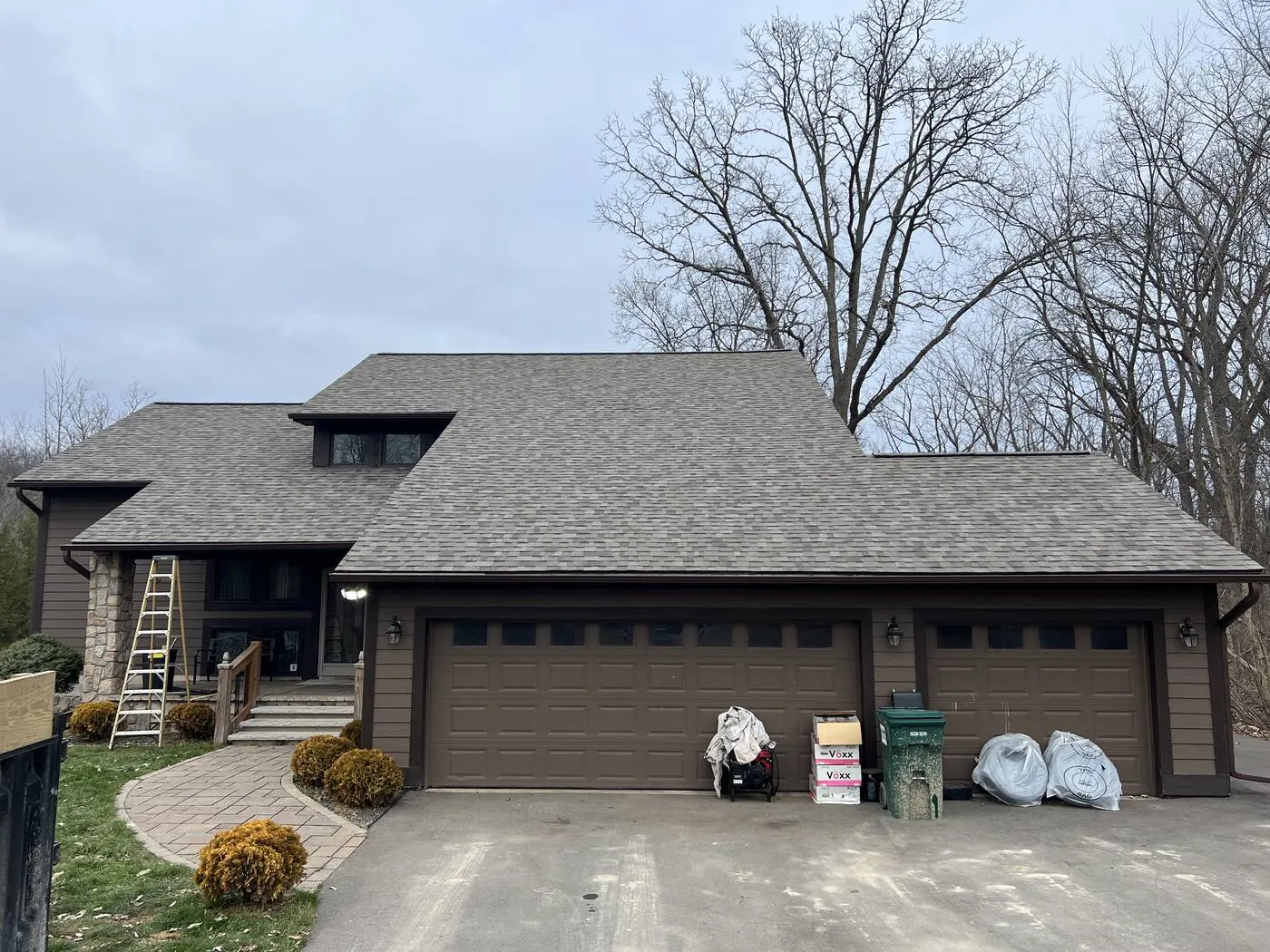
After a wind or hail storm, the steps that matter most are simple: stay safe, protect the house from more water, document the damage before anything is moved or repaired, and report the claim to your insurance company promptly. A careful roof inspection with dated photos gives you the clearest picture of what the storm actually did, so you and your insurer are working from the same facts.
This guide walks Michigan homeowners through the process in order, from the first hour after the storm to the day the new roof goes on.
Step 1: Stay safe and stay off the roof
Do not climb onto a roof after a storm. Shingles can be loose, the surface may be wet or covered in debris, and there may be downed lines nearby. Look from the ground and from inside instead. Check ceilings and the attic for drips or stains, and walk the yard for pieces of shingle, metal or broken branches. If a tree is on the house or a wire is down, call the utility and stay clear.
Step 2: Prevent more damage
Most homeowners policies expect you to take reasonable steps to stop further damage after a storm. If water is coming in, move belongings, put down buckets and have the opening covered with a tarp or temporary patch as soon as it is safe. Keep a record of anything you do: photos before and after, and notes on who did the work and when.
Step 3: Document everything
Good documentation is the backbone of a smooth claim. Take photos and video right away, before anything is cleaned up or repaired:
- Wide shots of each side of the house and roof from the ground
- Close-ups of missing or torn shingles, dented vents, gutters, downspouts and window screens
- Hail on the ground with something for scale, if you can safely do it
- Interior water stains, wet insulation and damaged belongings
- Fallen limbs and any debris on the roof or in the yard
Write down the date and time of the storm. The National Weather Service keeps storm reports by area, which can help confirm what hit your neighborhood. For example, Livingston County saw gusts estimated at 70 mph in Howell during the September 2026 storms; our September 2026 windstorm roof check covers what that wind did to local roofs.
Step 4: Get a professional roof inspection
Storm damage is often hard to see from the ground. Wind can break the seal strips that hold shingles down without tearing them off, and hail can bruise shingles in ways only a close look reveals. A roofer who inspects storm damage regularly will check the shingles, ridge caps, flashing, vents, gutters and soft metals, and photograph what they find with the date recorded.
On a storm inspection, we walk the roof, test shingle seals by hand, mark and photograph hail hits and check the attic, then give you a written report with photos you can share with your insurance company. If the damage is not from the storm, or is minor, we tell you that too. Read more about how a hail inspection works.
Step 5: Read your policy
Before or while you report the claim, read the parts of your homeowners policy that cover the roof. Look for:
- Which perils are covered, such as wind and hail, and any exclusions
- How the policy treats older roofs, since some policies limit coverage based on the age of the roof
- How long you have to report damage after a storm
- Whether code-required upgrades are covered
If anything is unclear, ask your insurance agent. Every policy is different, and your agent is the best source for what yours includes.
Step 6: Report the claim promptly
Contact your insurance company or agent as soon as you know there is damage. Have your policy number, the date of the storm, a short description of the damage and your photos ready. Write down your claim number and the name of everyone you speak with. Waiting too long can make it harder to show that the damage came from a specific storm.
Step 7: The adjuster's inspection
Your insurer will send an adjuster to inspect the damage. Be home for the visit if you can, walk the property with them and point out everything you documented, including interior damage. Share your photos and your roofer's inspection report. Ask the adjuster what happens next and when you can expect their findings.
Step 8: Review the adjuster's report
When the adjuster's report arrives, compare it with your own photos and your roofer's findings. Check that every damaged area is listed, including items that are easy to miss, such as vents, flashing, gutters and ridge caps. If something is missing, or more damage is found once the old roof comes off, your insurance company has a process for a reinspection or a supplement. Ask them how to request one, and share any new photos and documentation.
Step 9: Choose a local contractor and get the work done
After big storms, out-of-area crews often go door to door. Before you sign anything, check that the contractor is licensed in Michigan, insured, has a local address and a long history of local reviews, and will be around to honor the warranty. Our guide to choosing the right roofing contractor covers what to check, including how to look up a Michigan license.
A storm is often the moment an aging roof gets replaced. As an Owens Corning Platinum Preferred Contractor, we install complete Owens Corning systems and can register the strongest Owens Corning warranty coverage in your name. On every roof replacement, we install new flashing, ice and water barrier and balanced ventilation along with the shingles.
Step 10: Keep your records
Keep a folder, paper or digital, with your photos, inspection report, claim number, adjuster's report, every email and letter from your insurer and your contractor's paperwork and warranty. You will want it if a question comes up later, and it is useful when you sell the house.
Common mistakes that slow a claim down
- Waiting weeks to report damage
- Cleaning up or making permanent repairs before documenting the damage
- Climbing onto the roof yourself
- Not checking the attic and ceilings for hidden water
- Signing with a contractor you met at the door without checking their license and local track record
- Losing track of claim numbers, names and dates
Where Michigan homeowners can get help
If you have questions about your rights as a policyholder or a dispute with your insurance company, the Michigan Department of Insurance and Financial Services (DIFS) offers consumer guidance and accepts complaints. Your insurance agent is also a good first call for questions about your specific policy.
Roof insurance claim questions
Should I call a roofer or my insurance company first?
Report the damage to your insurer promptly, and get a professional roof inspection as early as you can. Many homeowners schedule the inspection first so they know what they are reporting and have photos to share. Either way, do not wait long on either step.
How long do I have to file a roof claim in Michigan?
It depends on your policy. Most policies require prompt notice of damage, and some set specific time limits. Check your policy or ask your agent, and report damage as soon as you find it.
Will the insurance company replace my whole roof?
That depends on the extent of the storm damage, your policy and the condition of the roof. Some claims cover repairs to the damaged areas, and others cover a full replacement. Your adjuster's report will spell out what is covered.
Can hail damage be hard to see?
Yes. Hail often bruises shingles and knocks granules loose without leaving holes, and the damage may not leak right away. A close inspection that marks and photographs each impact is the best way to find it.
What if more damage is found after the old roof is torn off?
Hidden damage, such as soft or water-damaged decking, sometimes shows up only once the shingles are removed. Photograph it and let your insurance company know. They can explain how to request a supplement or reinspection.
Get a storm damage inspection
If a storm has come through your neighborhood, we will inspect your roof for free, document what we find with dated photos and give you a written report. Learn more about our storm damage restoration and insurance claim assistance services in Howell, Brighton, Hartland, Fowlerville, Pinckney and across Greater Southeast Michigan. Our inspectors are HAAG Certified. Call On Top Roofing at (810) 588-3933 or request your free estimate.