Roofing blog
Thinking About Solar Panels? Check Your Roof First
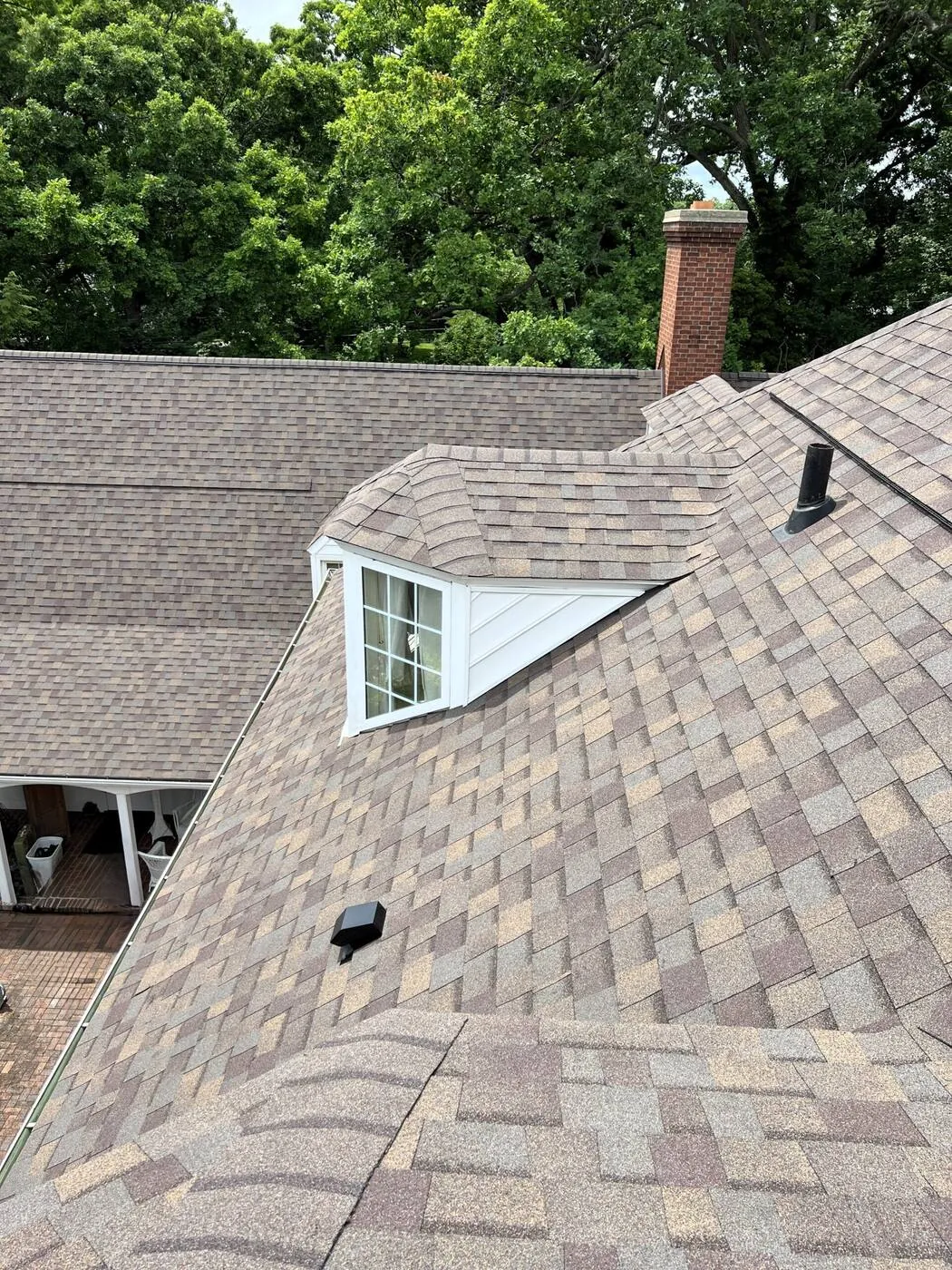
If your roof is more than about ten years old, or showing signs of wear, have it inspected before solar panels go on, and consider replacing it first. Solar panels are typically designed to last 25 to 30 years, and if the roof under them wears out halfway through, the panels have to be taken down and put back up so the roof can be replaced. Planning the two together means the roof and the panels can age side by side.
Why roof age matters before solar
Most solar panels carry a manufacturer warranty of around 25 years, and many keep producing power beyond that. An architectural asphalt roof installed and ventilated well typically lasts about 22 to 28 years in Michigan. A builder-grade three-tab roof, like many original roofs on 1990s and 2000s subdivision homes in Livingston County, lasts less. Put a new array on a roof with ten or fifteen years left, and the roof is likely to need replacing while the panels still have many years of life ahead of them.
When that happens, the panels, racking and wiring have to be removed, stored and reinstalled around the roof replacement. That adds coordination between two trades, time without solar production, and the risk of damage to the panels or their connections. Removing panels can also affect the panel manufacturer's warranty, which is why solar companies generally recommend that their own installers handle removal and reinstallation.
Signs your roof should come first
- The roof is more than about ten to fifteen years old, or you do not know its age
- Your home was built between the mid-1990s and late 2000s and still has its original roof
- Shingles are curling, cracking or shedding granules into the gutters
- You have had leaks, stains or ice dams in recent winters
- The decking feels soft or the roof looks wavy
- Pipe boots, flashing or vents near where the panels would go are cracked or worn
What the roof under solar panels needs
Solar panels are attached to the roof with mounts bolted through the shingles into the rafters or deck. Each mount is a penetration that has to be flashed and sealed correctly. That works best on a sound deck, a roof with plenty of life left and a roofing system that is designed for the attachment. A few things to plan for:
- Sound decking. Mounts need solid wood to fasten into, so soft or delaminated sheathing should be replaced before the array goes on.
- Ventilation that works. Panels shade part of the roof, but the attic underneath still needs balanced airflow to protect the shingles and prevent condensation in winter.
- Clear paths for snow and ice. Snow often slides off panels in large sheets, which affects gutters and the roof below the array. Ice and water barrier past the code minimum at the eaves matters even more.
- Flashing that is done right. New pipe boots, vents and chimney flashing installed during the roof replacement mean fewer roof repairs under panels later.
Who is responsible for leaks around solar mounts?
This is worth sorting out before anything is installed. Penetrations made by a solar installer are usually covered by the solar company's workmanship warranty, not the roofer's or the shingle manufacturer's. Roofing warranties commonly exclude damage caused by other trades that cut or penetrate the roof. Ask your solar installer how they flash their mounts, what their roof penetration warranty covers and for how long, and keep that paperwork with your roofing records.
Questions to ask your solar installer about the roof
- Will you inspect the roof before installation, and what will you do if you find a problem?
- How are the mounts attached and flashed, and are they approved for my type of shingle?
- Who covers a leak at a mount, for how long, and is that in writing?
- If the roof needs replacing later, will you remove and reinstall the panels?
- How will snow sliding off the panels be handled at the gutters and walkways below?
Clear answers to those questions, combined with a roof that has plenty of years left, are the best protection for both the roof and the panels.
How to plan the roof and solar together
Start with a roof inspection before you sign a solar contract. If the roof has many years left, the solar company can proceed with confidence. If it is getting close, schedule the roof replacement first and the solar installation after, so the panels go onto a new roof. Share your new roof's details, including the shingle type and warranty information, with your solar installer so they can choose mounts and flashing that are compatible with it.
We install new roofs as a complete Owens Corning system, with sound decking, ice and water barrier past the code minimum, new flashing at every penetration and ventilation balanced to the attic, and we register the warranty in your name as an Owens Corning Platinum Preferred Contractor. That gives your solar array a roof that is built to last as long as it does.
Solar and roofing questions
Should I replace my roof before installing solar panels?
If your roof is more than about ten to fifteen years old or showing wear, replacing it first usually makes sense so the roof and panels can last the same length of time.
Can a roof be replaced with solar panels on it?
Yes, but the panels have to be removed and reinstalled, usually by the solar installer, around the roof replacement. Planning ahead avoids that step.
Do solar panels damage a roof?
Properly installed and flashed mounts should not cause leaks. Problems usually come from poor flashing or mounts installed on a roof that was already near the end of its life.
Do solar panels void a shingle warranty?
Roofing warranties commonly exclude damage from other trades' penetrations. Ask both your roofer and solar installer how the work will be covered before installation.
Get a roof check before you go solar
We will inspect your roof, tell you honestly how many years it has left and put it in writing with photos, so you can plan your solar project with confidence. Inspections are free in Howell, Brighton, Hartland and across Greater Southeast Michigan, and our inspectors are HAAG Certified. Call On Top Roofing at (810) 588-3933 or request your free estimate.