
Roofing blog
Where Roofs Actually Fail: Dormers, Valleys, Chimneys and the Spots We Check First
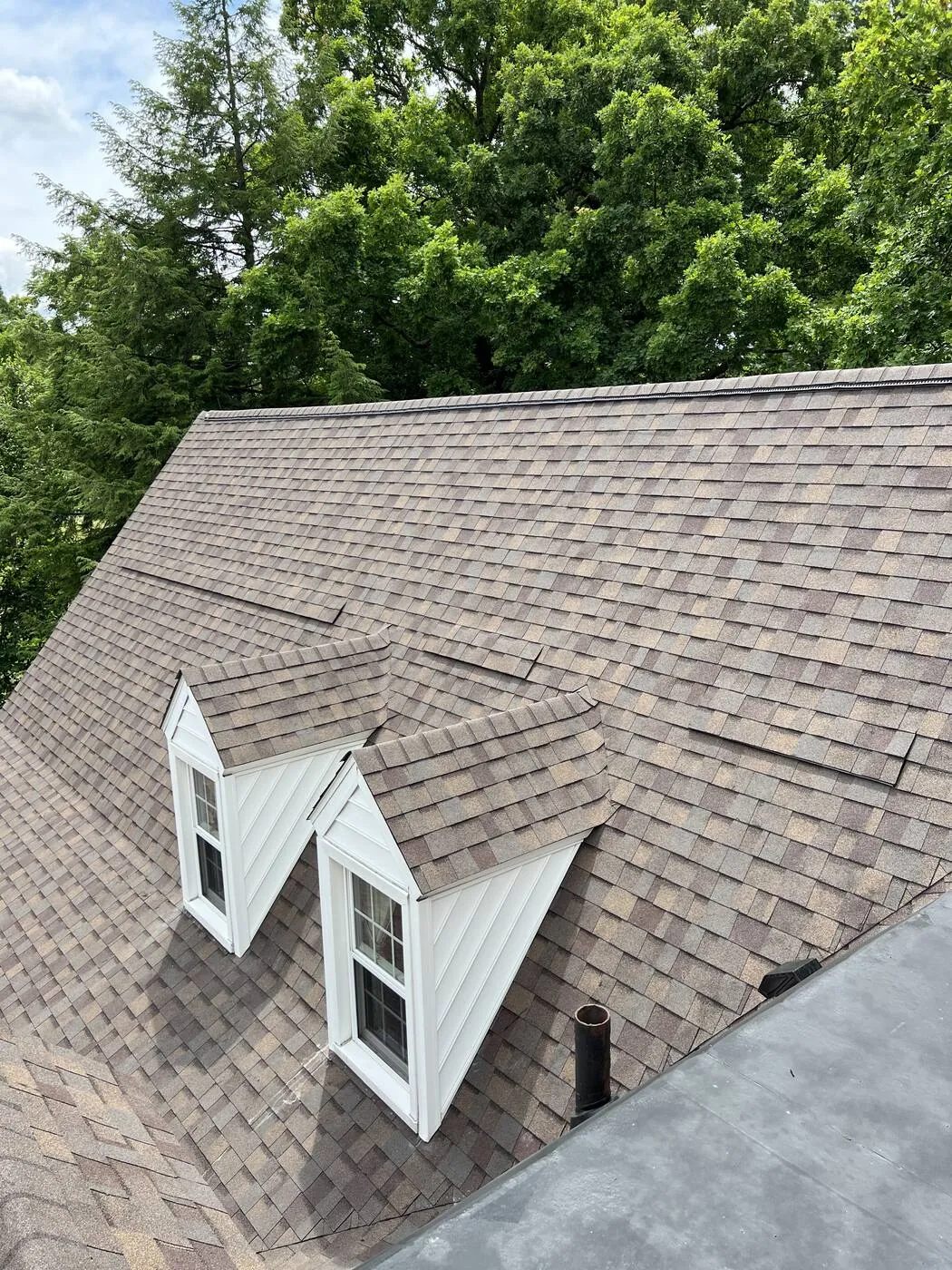
A roof almost never leaks in the middle of a big open slope. It leaks where two things meet. After sixteen years of inspecting roofs across Livingston County, we can tell you where the water is getting in before we set the ladder, because it is the same handful of places on nearly every house. If you want to know where your roof is most vulnerable, this is the list.
Valleys
A valley is where two roof planes meet and drain into each other. It carries more water than any other part of the roof, and in winter it holds snow and ice longer than the slopes around it. Valleys fail when the shingles are cut too close to the center line, when the underlayment beneath them is only felt, or when debris is left to sit and dam the water. Most colonials in Howell and Brighton have at least two valleys. Every one of ours gets ice and water barrier the full length and a clean, consistent cut. You can see what a properly finished valley looks like in our gallery.
Dormers
Dormers are small roofs stuck onto a big roof, and each one creates two sidewalls, a head wall and often a small valley on each side. The sidewalls are where they leak. The correct detail is step flashing, one piece per shingle course, tucked behind the siding. What we find on older homes is a single long piece of L-flashing with caulk along the top, or nothing at all with the siding relied on to shed water. It works for a while. Then it does not. Homes with multiple dormers, common in the Cape Cods and foursquares around Howell and Fowlerville, have a lot of these joints, and we treat every one of them as its own flashing job.
Chimneys
The single most common leak we find in Livingston County is at a chimney, and the reason is that a chimney has four sides that all need different flashing. The upslope side needs a cricket or saddle if the chimney is wide, so snow and water split around it. The two sides need step flashing woven into the courses. The downslope side needs an apron. And all of it needs counterflashing cut into the mortar joints, not surface-mounted with a bead of sealant. On a brick chimney that has been through thirty Michigan winters, the mortar is often soft and the counterflashing is loose. New roof, old flashing, same leak.
Sidewalls where a roof meets a second story
Many two-story homes have a garage or porch roof that runs into the wall of the second story. Same problem as a dormer, bigger scale. Step flashing behind the siding, kickout flashing at the bottom to throw water into the gutter instead of behind the siding. Missing kickout flashing is a quiet cause of rotten sheathing and wet insulation inside the wall, and it is missing on a lot of houses built in the 1990s and 2000s.
Pipe boots
Every plumbing stack that comes through the roof has a rubber boot around it. The rubber cracks from sun after ten to fifteen years, long before the shingles are done. A split boot drips right onto the ceiling below the bathroom. We replace every boot on every roof, and on shaded or high-sun slopes we use boots with a longer-lasting collar.
Skylights
A skylight has the same sidewall and head wall issues as a dormer, plus the seal in the unit itself. If your roof has skylights, they are on the short list of places to check after any storm. We wrote a full post on how we handle skylights during a roof replacement.
Low-slope transitions
Porch roofs, additions and bump-outs frequently have a lower pitch than the main roof. Where a 3/12 addition roof meets a 8/12 main roof, water slows down, snow piles up and shingles that are fine on the steep part are being asked to do a job they cannot do on the shallow part. These transitions need extra ice and water barrier and sometimes a different roofing material entirely. We see a lot of them on the cottage-turned-house properties around the lakes in Hamburg and Genoa townships.
Eaves and rakes
The edges of the roof take the wind. Missing or short starter strip, no drip edge, or shingles that hang too far past the edge all give the wind something to grab. After a windstorm, the first thing we check is the rake edge on the side the wind came from. Eaves also collect ice dams in winter, and the drywall stains from an ice dam show up on the exterior walls of the top floor, right at the ceiling line.
Ridges
Ridge caps are the most exposed shingles on the house. Old-style ridge caps cut from three-tab shingles crack along the bend and lift in wind. Modern hip and ridge shingles are thicker and designed for the bend. If your ridge line looks ragged from the street, the caps are failing, and water can get into the ridge vent slot beneath them.
What this means for you
If you want to check your own roof, check these spots, in this order, from the ground with binoculars or from the attic with a flashlight on a rainy day. If you want us to check them, that is what a free inspection is. We photograph every one of these details on your roof and show you exactly what is holding up and what is not. Request an inspection from our Howell office and we will go through the list together.