
Roofing blog
How Much Snow Can a Roof Hold?
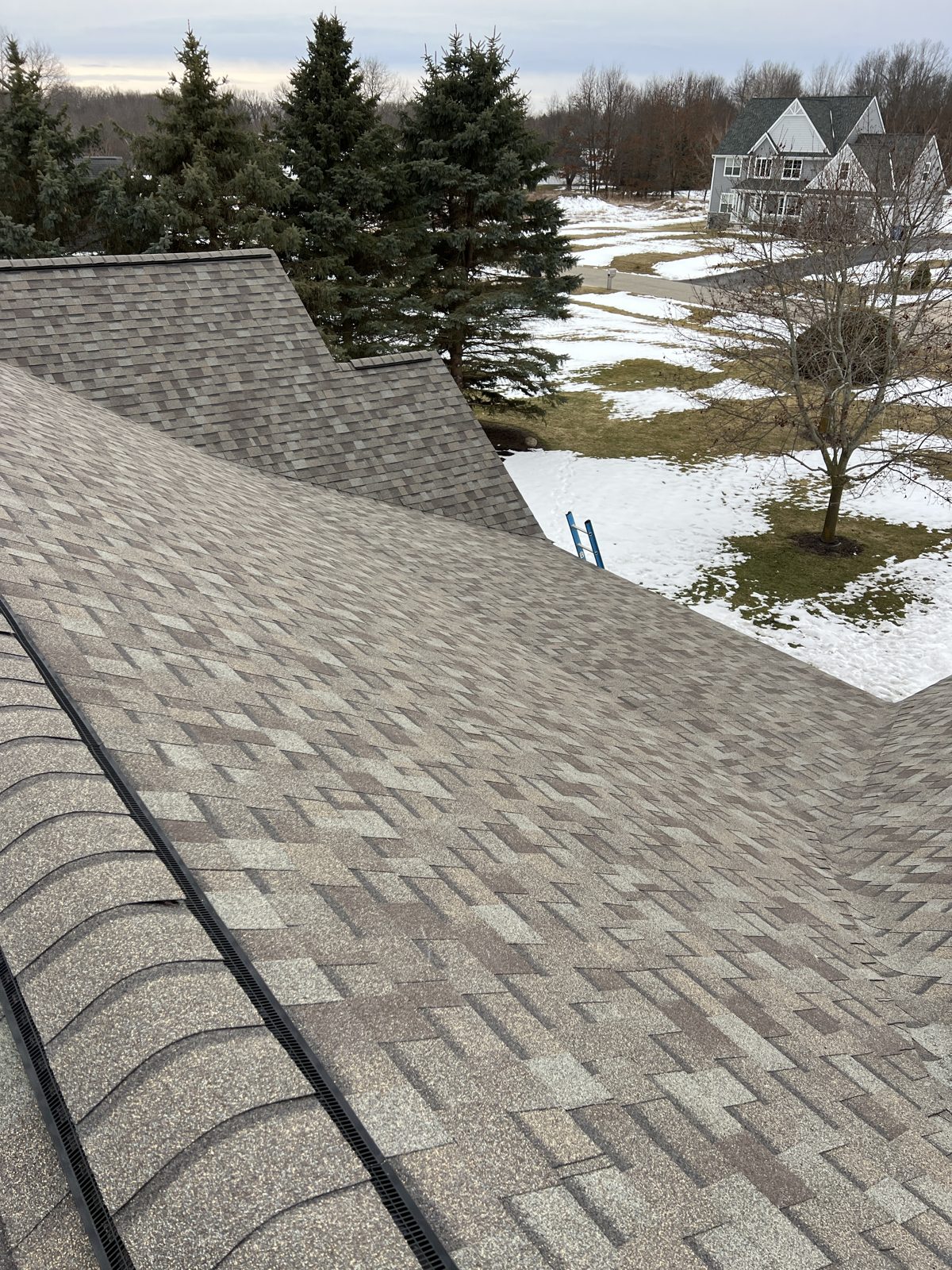
Most homes in good condition can safely carry about 20 pounds of snow per square foot before the roof is under real stress. In practice, that works out to roughly 3 to 4 feet of light, fresh snow, about 2 feet of old, packed snow, or a lot less if it is heavy and wet or glazed with ice. For most winters in Howell and Livingston County, a healthy roof handles the snow just fine. The time to pay attention is after a big wet storm, a long stretch of buildup, or when you see warning signs inside the house.
Why the weight matters more than the depth
Snow depth is what you see from the driveway, but weight is what your roof feels. A foot of fluffy snow after a cold, dry night is mostly air. A foot of wet, heavy snow from a storm that comes in near freezing can weigh several times as much. Once rain falls on top of snow, or the snow melts and refreezes into ice, the load climbs fast without the pile looking any bigger.
The Insurance Institute for Business and Home Safety (IBHS) gives homeowners a simple rule of thumb for estimating snow weight:
- Fresh snow: 10 to 12 inches weighs about 5 pounds per square foot, so it takes a lot of fresh snow to reach 20 pounds.
- Packed or old snow: just 3 to 5 inches weighs about 5 pounds per square foot, because it has settled and soaked up moisture.
- Ice: 1 inch of ice weighs about the same as a foot of fresh snow.
- Mixed layers: about 2 feet of old snow plus 2 feet of new snow on top can go past what many roofs are built to carry.
That last point is the one that catches Michigan homeowners. Our snow rarely arrives all at once. It builds up over a few storms, thaws a little on a sunny afternoon, refreezes overnight and then gets buried again. By late winter, the snow on a north-facing slope in Brighton or Hartland can be much heavier than its depth suggests.
What this means for homes in Livingston County
Homes here are built for the winters we actually get. Building codes in Michigan set a design snow load for every new roof, based on the snow history of the area, and roof framing is sized to carry it with a safety margin. That is why a well-built roof on a newer subdivision home in Howell or Genoa Township rarely has trouble with a normal winter.
The risk goes up when something has weakened the roof or added extra load to one spot. These are the homes and roof areas we keep an eye on after a heavy storm:
- Older homes and additions. Farmhouses, cottages around the lakes in Pinckney, Hamburg and Whitmore Lake, and add-ons built without a permit may have lighter framing than a modern roof.
- Low-slope and flat sections. Porches, sunrooms, garages and low additions shed snow poorly, so it piles up and stays.
- Valleys and lower roofs below taller ones. Wind and sliding snow drift into valleys and onto lower roofs, building up far deeper there than anywhere else.
- Roofs with rot or soft decking. Long-term leaks, ice dam damage or poor attic ventilation can weaken the decking and rafters that carry the load.
- Roofs with layered shingles. A roof with two layers of shingles is already carrying extra weight before the first snowfall.
Warning signs your roof is carrying too much snow
Real roof collapses on homes are rare, but a roof under strain usually gives you clues first. Call a roofer, and stay out from under the area, if you notice any of these:
- Ceilings that sag or crack, especially in the middle of a room or along a seam in the drywall
- Creaking, cracking or popping sounds from the attic or ceiling that are new or getting louder
- Interior doors, especially upstairs, that suddenly stick or will not latch
- New water stains or drips, which often mean an ice dam is backing water under the shingles
- Rafters or roof sheathing in the attic that look bowed or have visible cracks
- A roofline that looks like it dips when you look at it from the street
Should you remove snow from your roof?
Most of the time, no. A sound, sloped roof in Greater Southeast Michigan is designed to hold our normal snowfall, and the snow will slide off or melt on its own. Climbing onto an icy roof is one of the most dangerous things a homeowner can do in winter, and shoveling can tear shingles, bend gutters and damage flashing.
There are times when clearing some snow makes sense:
- After a heavy, wet storm, or rain on top of deep snow, especially on a low-slope porch, garage or addition
- When you see any of the warning signs above
- When ice dams keep forming along the same stretch of eaves and water is getting inside
If you do clear snow yourself, stay on the ground. A roof rake with a long handle lets you pull snow off the first few feet above the gutters, which is where ice dams start. Pull the snow down the slope, not up, leave an inch or two on the shingles so you do not scrape the granules off, and watch for power lines. For anything you cannot reach from the ground, call a professional.
Snow, ice dams and your roof
In Livingston County, the bigger winter problem is usually not the weight of the snow but what happens when it melts. Heat escaping from the living space warms the roof deck, snow melts and runs down to the cold eaves, then refreezes into a ridge of ice. Water backs up behind that ridge and works its way under the shingles. The same snow that your roof holds easily can still cause a leak. We cover the causes and the lasting fixes in our guide to ice dams on Michigan roofs.
That is why the parts of the roof you cannot see matter so much. Good attic insulation and balanced ventilation keep the roof deck cold so snow melts evenly. Ice and water barrier at the eaves, in the valleys and around chimneys gives the roof a sealed layer if water does back up. If your home gets icicles and ice dams every winter, a roof repair visit to check flashing, ventilation and damaged areas is a good first step.
How a new roof is built for Michigan snow
When an older roof is near the end of its life, replacing it is the best chance to fix the hidden weak spots. On every roof replacement, we tear off to the decking, replace any soft or rotted sheathing, and install ice and water barrier past the code minimum at the eaves and up every valley. We also make sure the attic is ventilated correctly, so snow melts evenly instead of feeding ice dams.
As an Owens Corning Platinum Preferred Contractor, we install complete Owens Corning roofing systems, with matched underlayment, ice and water protection, starter strips, ventilation and shingles designed to work together. That full-system approach is what lets us register the strongest Owens Corning warranty coverage in your name, and it is what keeps a roof doing its job through decades of Michigan winters.
Snow on the roof: common questions
How much does a foot of snow weigh on a roof?
It depends on the snow. A foot of light, fresh snow weighs about 5 pounds per square foot. A foot of old, packed snow can weigh 12 to 20 pounds per square foot or more, and a foot of very wet snow can weigh even more than that.
Is it safe to walk on my roof to clear snow?
No. Snow hides ice and soft spots, and falls from roofs are a common cause of serious winter injuries. Use a roof rake from the ground, or call a professional if snow needs to come off higher on the roof.
Can snow on the roof cause a leak even if the roof is not damaged?
Yes. Ice dams can push meltwater under shingles that are otherwise in good shape. Proper attic ventilation, insulation and ice and water barrier at the eaves are what keep that water out.
Worried about your roof this winter?
If your ceilings are cracking, your roof leaks during a thaw, or you are not sure your roof is ready for another Michigan winter, we are happy to take a look. Our roof inspections are free in Howell, Brighton, Hartland, Fowlerville, Pinckney and across Greater Southeast Michigan, and we show you photos of everything we find. Our inspectors are HAAG Certified. Call On Top Roofing at (810) 588-3933 or request your free estimate.