
Roofing blog
Ice Dams on Michigan Roofs: Roof Rakes, Heat Cables and the Fixes That Last
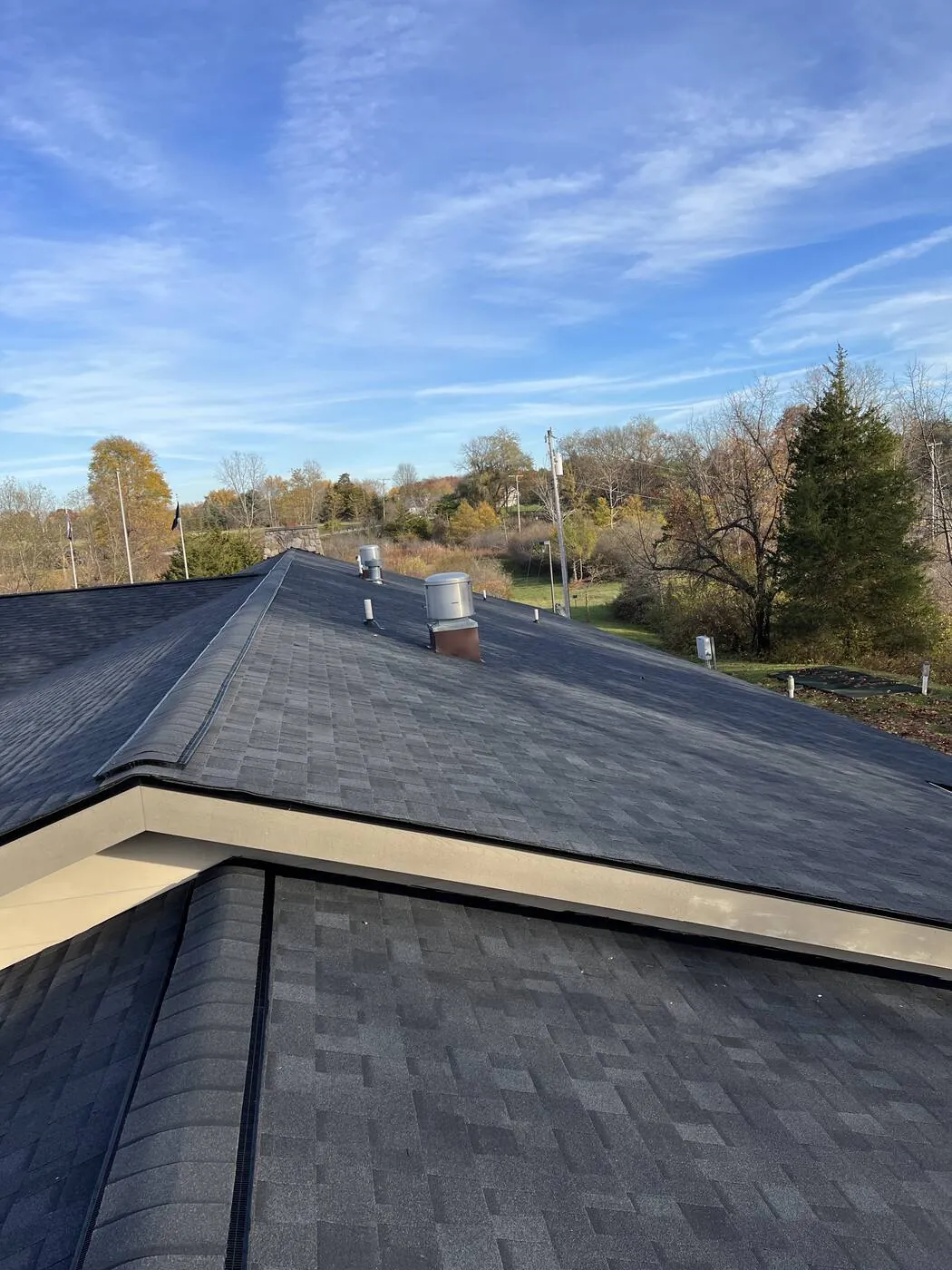
An ice dam is a ridge of ice that builds along the lower edge of a roof when heat from the house melts snow higher up and the water refreezes at the cold overhang. Water then pools behind the ice and is pushed under the shingles. The lasting fix is a colder attic: air sealing, insulation and balanced ventilation, backed by an ice barrier at the eaves.
That is the short answer. The longer one matters, because every winter in Howell, Brighton and Hartland we get the same calls in the same order: first the icicles, then the stain on the bedroom ceiling, then the question of whether to climb up there with a hammer. This guide covers what is actually happening on your roof, what you can safely do about it this winter, and what fixes the problem so you are not doing it again next year.
Why Livingston County roofs build ice dams
Ice dams need three things at once: snow on the roof, a roof surface above freezing in the upper section, and an overhang below freezing at the edge. Michigan supplies the first and third every winter. The second comes from the house.
Warm air from the living space leaks into the attic through gaps around ceiling light fixtures, bath fans, attic hatches, plumbing and wiring holes, and the tops of interior walls. That warm air heats the underside of the roof deck. Snow on the warm part of the roof melts from underneath, the water runs down under the blanket of snow, and when it reaches the overhang, which sits outside the heated walls and stays as cold as the outdoor air, it freezes. Every melt adds another layer to the dam.
Our weather makes it worse. A winter in Livingston County is not one long freeze. It is a long series of thaws and refreezes, with sunny afternoons above freezing and nights well below. Each cycle adds ice. The houses that dam worst tend to share a few traits: older homes with thin or uneven attic insulation, Cape Cods and story-and-a-half homes with sloped ceilings where there is almost no room for insulation, homes with recessed can lights in the top-floor ceiling, and any roof with a long upper slope draining onto a short, cold overhang.
What an ice dam does to a house
Shingles are designed to shed water running downhill. They are not designed to hold back standing water. When an ice dam forms, water pools behind it and gets pushed back up under the shingle courses, past the nails, and onto the roof deck. From there it can soak the decking, run down the inside of the exterior wall, wet the insulation and show up as a stain on the ceiling or around a window frame.
The visible damage is often the smallest part. Wet insulation loses much of its value and can stay damp inside the wall for weeks. Roof decking that gets soaked winter after winter turns soft in the lowest few feet above the eave, which is the single most common rot pattern we find when we tear off an older Livingston County roof. Heavy ice also pulls gutters away from the fascia and drops dangerous chunks over doorways and walks.
What you can safely do this winter
Use a roof rake from the ground
A roof rake is a long aluminum pole with a wide blade that lets you pull snow off the lower part of the roof while standing on the ground. Clearing the first several feet above the gutter after each significant snowfall takes away the snow that would otherwise melt and feed the dam. Extension services that study cold-climate housing, including University of Missouri Extension, list raking and a push broom as reasonable short-term steps while warning against damaging the roofing.
A few rules keep it safe and keep the shingles intact:
- Stay on the ground. Never climb onto a snowy or icy roof, and never use a ladder on ice.
- Pull, do not chop. Let the blade glide over the shingles rather than scraping or digging into them. A rake with small rollers or a plastic edge is easier on the granules.
- Watch overhead. Never rake near the service drop or any overhead wire, and remember that a long pole and wet snow can come down on you.
- Leave a little. Trying to scrape down to bare shingle tears off granules. A thin layer of snow left behind is fine.
Do not chip, hammer or torch the ice
This is where most of the self-inflicted roof damage we see in winter comes from. A hammer, ice pick, shovel or hatchet will cut through shingles and break the seal strips, and a heat gun or torch is a fire risk on an asphalt roof. Rock salt thrown on the roof can stain siding, corrode metal and kill landscaping under the drip line. If water is actively coming in, the safest temporary step is to call a roofer who removes ice with low-pressure steam, which melts channels through the dam without hacking at the roof.
Protect the inside while you wait
If a stain appears, put a bucket under any drip, move belongings away from the wall, and look in the attic if you can do so safely. A wet patch of insulation is a clue to where the warm air and the water are getting in. Take photographs. They help us diagnose the leak, and your insurance agent may ask for them.
Heat cables: what they do and what they do not
Heat cables, also sold as heat tape or roof de-icing cable, are electric cables clipped to the lower edge of the roof in a zigzag pattern and often run down through the gutter and downspout. They are among the most searched ice dam products every winter, and they deserve a straight answer.
What they can do: keep a melt channel open so water from the upper roof has a path off the edge, and keep a downspout from freezing solid. On a trouble spot that dams every year, such as a low-slope porch roof tucked under a second story or a valley that dumps onto a short overhang, a properly installed cable can reduce the worst of the backup.
What they cannot do: stop ice dams from forming. The melting effect extends only a short distance from the cable, so ice can still build above and around the zigzag. Cables do nothing about the warm attic causing the problem, and they need to be switched on before a storm, not after the dam has formed.
If you use them, follow a few precautions. Choose a cable listed for roof and gutter de-icing rather than pipe heat tape. Plug it into a GFCI-protected outdoor outlet as the manufacturer specifies. Install it exactly to the manufacturer's spacing and clip instructions without nailing through shingles, and inspect it every fall for cracked jackets or crushed sections. Cables also get in the way when a roof is replaced, so if a replacement is in your near future, plan the cable layout with your roofer so it can be reinstalled correctly over new shingles.
Think of heat cables as a bandage for a known trouble spot, not a cure for the house.
The fixes that actually stop ice dams
The goal is simple to state: keep the entire roof deck as close to the outdoor temperature as possible, so snow melts evenly from the sun and not from the house. Three things do that, in this order.
1. Seal the air leaks into the attic
Air leakage carries far more heat into the attic than conduction through the insulation does, so it comes first. The usual culprits are gaps around recessed lights, bath fan housings, the attic hatch or pull-down stairs, plumbing vent pipes, wiring holes in the top plates of walls, and the chase around a chimney, which needs fire-rated materials rather than foam. University of Missouri Extension lists sealing these leaks alongside insulation as the core prevention step.
2. Bring the insulation up to a modern level
Many homes built before the 1990s have a fraction of the attic insulation a new home gets today, and what is there has often been compressed, disturbed by cable installers or pulled back from the eaves. Extension guidance for cold climates recommends ceiling insulation in the range of R-38 to R-49. The weak spot on most houses is the outer edge of the attic over the exterior walls, where the roof comes down low and there is little room. Baffles that hold insulation back from the soffit vents let you insulate that edge fully without choking off the airflow.
3. Ventilate so the attic stays cold
A ventilated attic pulls cold outside air in at the soffits and lets it out at or near the ridge, carrying away whatever heat does reach the attic. The Michigan Residential Code sets the minimum ventilation in Section R806, and the principle is balance: roughly as much intake low on the roof as exhaust high on the roof. Soffit vents that are painted over, blocked by insulation or never cut open are one of the most common problems we find. Our guide to attic frost, condensation and ventilation walks through how that system should work.
The layer that protects the roof when ice dams happen anyway
Even a well-sealed house can see some ice at the eaves after a hard January. That is why the Michigan Residential Code requires an ice barrier in this climate. Section R905.1.2 calls for a self-adhering membrane that extends from the lowest edges of the roof to at least 24 inches inside the exterior wall line. The membrane bonds to the deck and seals around nails, so water pushed back under the shingles has nowhere to go.
Many older roofs were installed before this was standard practice, or with only a narrow strip at the edge. When we do a roof replacement, we run the ice and water barrier past the code minimum at the eaves on homes with a history of ice dams, up every valley, and around chimneys and skylights. You can read more about that layer in what's under your shingles.
When to call a roofer
Call if water is coming into the house, if the ice has pulled the gutters away from the fascia, if you see ice building in the same spot every winter, or if you have had stains at the same ceiling corner more than once. Repeated ice dams usually mean soft decking at the eaves and a missing or undersized ice barrier, and those are found and fixed properly with a roof repair on the affected section or as part of a replacement.
Frequently asked questions
How do I know if I have an ice dam?
Look for a thick ridge of ice along the gutter or roof edge, large icicles, especially ones with water dripping behind them, and ice forming on the siding or windows below the eave. Inside, watch for stains or damp spots on ceilings and the tops of exterior walls.
Is it safe to use a roof rake?
From the ground, with a long-handled rake, away from power lines, and without scraping down to the shingle surface, yes. Never climb onto a snowy roof to clear it.
Do heat cables prevent ice dams?
No. They can keep a drainage channel open in a known trouble spot, but they do not stop ice dams from forming and do nothing about the warm attic that causes them.
Should I chip the ice off my roof?
No. Chipping, hammering or torching ice damages shingles and can create a leak where there was none. Steam removal by a professional is the safe way to open the dam.
Will a new roof stop ice dams?
A new roof with a full ice and water barrier protects the house when ice dams form, but the roof alone does not stop them from forming. That takes air sealing, insulation and ventilation, which we evaluate on every replacement.
Get ahead of it before the first big snow
The best time to deal with ice dams is before December. We inspect roofs across Livingston County and Greater Southeast Michigan at no charge, look at the attic side as well as the shingles, and tell you in writing what is causing the problem and what will fix it. Call (810) 588-3933 or use the form on this page.