
Roofing blog
Nail Pops on a Roof: What Causes Them and Should You Worry?
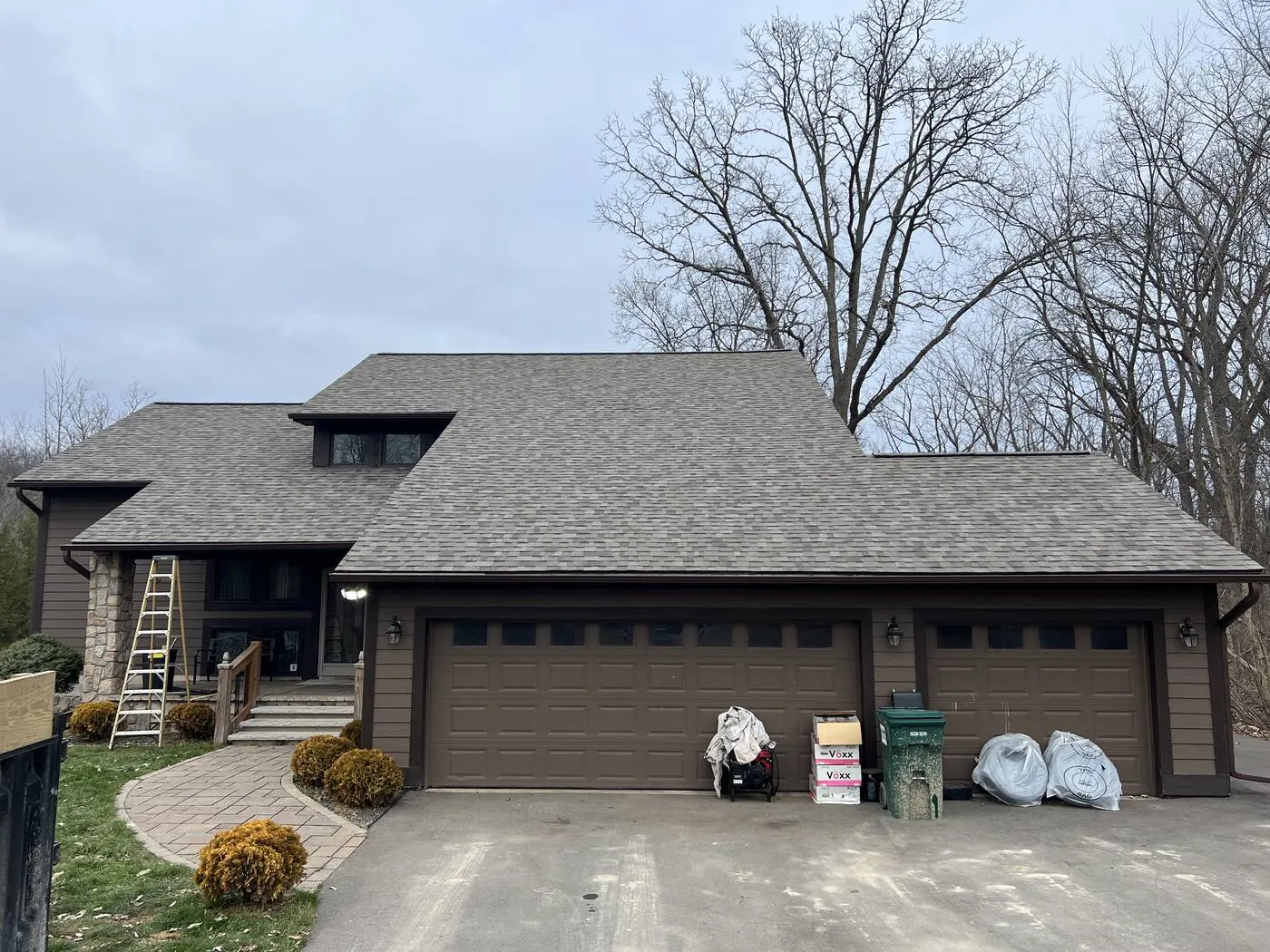
A nail pop is a roofing nail that has backed partway out of the roof deck and is pushing up on the shingle above it. It shows up as a small bump, and eventually it can punch through the shingle and let water run down the nail into the deck. A few nail pops are common and easy to repair, but many of them across a roof usually point to a deck or installation problem worth understanding.
What a nail pop looks like
From the ground or from photos, a nail pop looks like a small, raised bump in a shingle, as if something were pushing up from underneath. Over time the bump may wear through the granules, show a dark spot, or tear a small hole that exposes the nail head. On some roofs you can see a pattern of bumps along a line, which tells a roofer a lot about the cause.
Nail pops matter for two reasons. First, the hole they make lets water follow the nail straight into the deck, which causes slow leaks that are easy to miss. Second, a shingle that is being pushed up cannot seal flat, which makes it easier for wind to get underneath and lift it.
What causes nail pops
Wood movement
Roof decking expands when it is humid and shrinks when it is dry. In Michigan, that cycle is extreme, with humid summers, cold dry winters and dozens of freeze-thaw swings in between. Every cycle works a nail slightly in its hole. A nail that was not driven firmly into solid wood can gradually back out.
Nails that missed the framing or the deck
On plank decking, common on older homes in the City of Howell, a nail driven into the gap between boards has almost nothing to hold. On panel decking, a nail driven at an angle or near the edge of a panel holds poorly. Those nails are the first to back out.
Under-driven or over-driven nails
Nails that are not driven flush leave the head sitting proud under the shingle, which shows as a bump from day one. Nails that are over-driven cut into the shingle mat. The Michigan Residential Code calls for corrosion-resistant roofing nails with a minimum 12-gauge shank that penetrate at least 3/4 inch into the sheathing, or through it if it is thinner. Shorter nails, or the wrong nails, do not hold.
Soft or wet decking
Decking that has softened from attic condensation or old leaks cannot grip a nail. This is one of the more important causes, because widespread nail pops can be the first visible sign that the deck under the shingles is in poor condition.
Attic moisture and frost
In winter, frost that forms on nail tips in a poorly ventilated attic melts on sunny days and soaks the wood around the nail. Over several winters the wood around each nail softens and the nail loosens. If you see rusty nail tips or frost on the underside of the deck in the attic, ventilation is likely part of the story. Our post on attic frost, condensation and ventilation explains the fix.
How to spot nail pops
- Small raised bumps in the shingles, best seen in low morning or evening light
- Dark spots or worn granules on top of a bump
- Exposed nail heads, sometimes rusty, visible through a shingle
- Small water stains on the ceiling with no obvious source above them
- From the attic, nail tips that are rusty, wet or have frost on them in winter
Binoculars from the ground are the safest way to check. Please leave walking the roof to a professional, especially in fall and winter.
How nail pops are repaired
The right repair is not to hammer the nail back down, because it will back out again. The shingle is carefully lifted, the popped nail is pulled, a new nail is driven nearby into solid wood, the old hole is sealed, and the shingle is replaced if it has been punctured. On a roof with a handful of nail pops and a sound deck, that is a straightforward roof repair.
When nail pops are widespread, the question becomes why. If the deck is soft or the original nails were too short or poorly placed, fixing them one by one does not solve the cause. On an older roof with other signs of wear, a roof replacement that includes replacing bad decking and correcting the ventilation is the lasting answer.
How we prevent nail pops on a new roof
On every roof we replace, damaged decking is replaced before anything goes on top of it, nails are the right length and gauge for the deck, and each shingle is nailed flush in the manufacturer's nailing zone with the correct number of nails. We install Owens Corning shingles with the SureNail reinforced nailing strip, which gives each nail a stronger hold, and we balance the attic ventilation so the deck stays dry. As an Owens Corning Platinum Preferred Contractor, we register the complete roofing system in your name.
Nail pop questions
Are nail pops normal on a roof?
A few on an older roof are common. Many of them, or nail pops on a newer roof, point to a deck, nailing or ventilation problem that should be checked.
Can nail pops cause a leak?
Yes. Once a nail wears through the shingle, water can run down the nail into the deck and eventually show up as a ceiling stain.
Can I just hammer the nail back in?
Hammering it back usually fails because the hole is already enlarged and the shingle above can be damaged. The nail should be pulled and replaced with a new one in solid wood.
Does a home inspector flag nail pops?
Often, yes, especially if they are visible from the ground. A roofer can then tell you whether they are isolated or a sign of a bigger issue.
Have the bumps on your roof checked
If you have spotted bumps on your shingles, we will tell you whether they are nail pops, what is causing them and what the repair should be, in writing with photos. Inspections are free in Howell, Brighton, Hartland and across Greater Southeast Michigan. Call On Top Roofing at (810) 588-3933 or request your free estimate.