
Roofing blog
Attic Frost, Condensation and Roof Ventilation in Michigan Winters
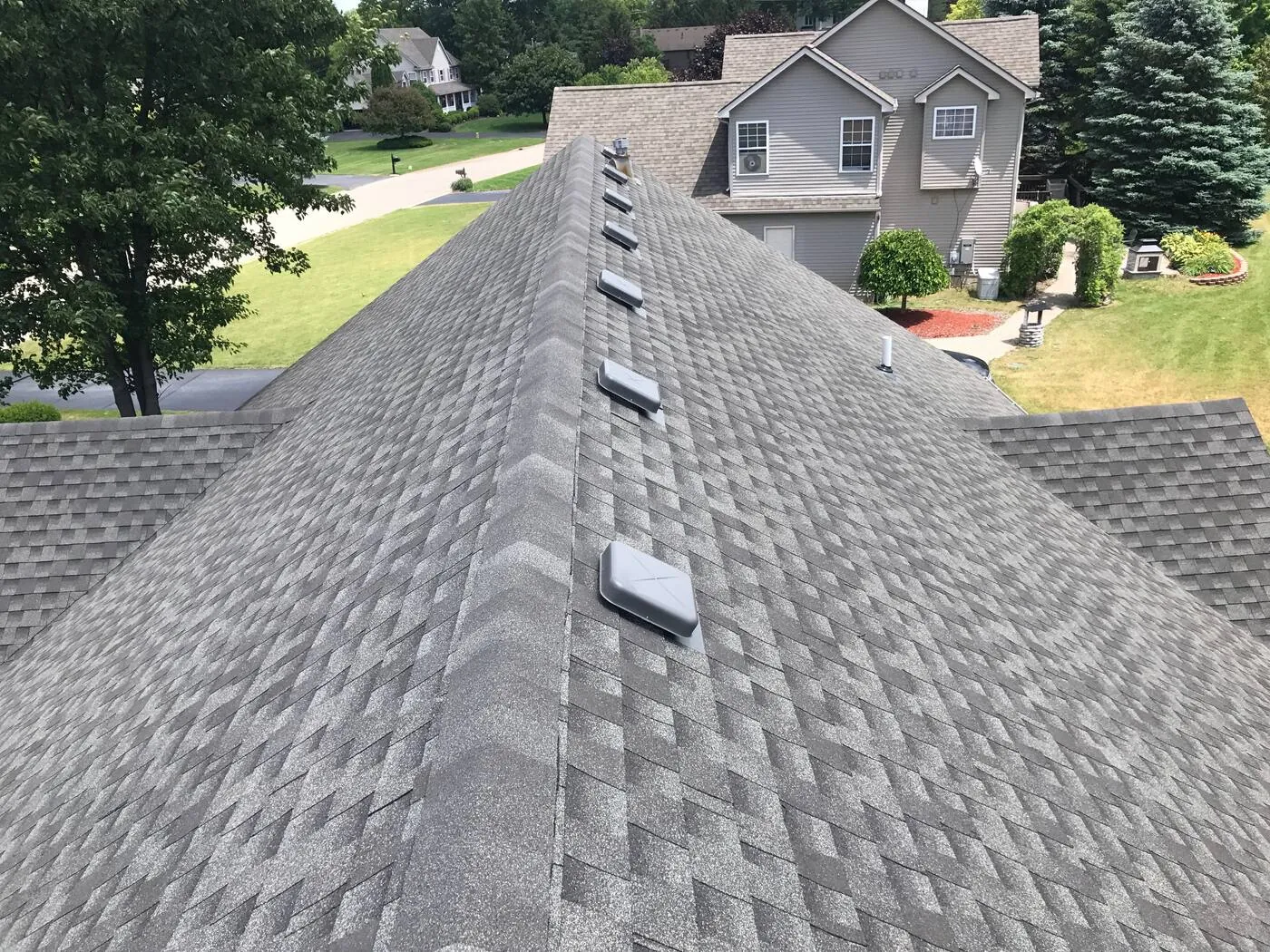
Frost on the nail tips, dark staining on the underside of the roof deck, or water dripping onto insulation with no roof leak above it are signs of attic condensation. In a Michigan winter it happens when warm, moist air from the house leaks into a cold attic that is not ventilated well enough to carry the moisture out. The fix is air sealing plus balanced intake and exhaust ventilation.
We find this on a large share of the attics we look at in Livingston County between December and March, and homeowners are almost always surprised by it. They call about a leak, we go up, and the shingles are fine. The water came from inside the house. This guide explains how that happens, what the Michigan Residential Code expects from an attic, and what actually fixes it.
What attic condensation looks like
Go into the attic on a cold morning in January with a flashlight and look up. The signs are usually easy to spot once you know them:
- White frost on the points of the roofing nails that poke through the deck, or a thin layer of frost across the sheathing itself
- Rust stains or dark rings on the wood around those nail tips, from frost that has melted and refrozen many times
- Black or gray staining on the underside of the decking, often heaviest on the north slope
- Damp, matted or stained insulation in spots, with no matching damage on the roof above
- Water spots on the top-floor ceiling that appear during a thaw rather than during rain
- A musty smell in the attic or upstairs closets
The tell is timing. A roof leak shows up during rain or melting snow. Condensation shows up when a cold snap breaks, because all the frost that collected on the underside of the deck melts at once and rains down onto the insulation. We hear "it only leaks when it warms up" every winter, and very often the roof is not the problem.
Why it happens in Michigan homes
A house produces a remarkable amount of water vapor every day from showers, cooking, laundry, houseplants, aquariums and people simply breathing. In winter, that warm, moist air rises and pushes into the attic through any opening in the top-floor ceiling. The roof deck above it may be in the single digits. When moist air touches a surface that cold, the moisture condenses and, below freezing, turns straight to frost.
Two problems usually combine. The first is air leakage: gaps around recessed lights, bath fan housings, the attic hatch, plumbing stacks, wiring holes and chimney chases let indoor air flow straight into the attic. The second is ventilation that cannot keep up: soffit vents blocked by insulation or never cut open, a single small roof vent doing the job of a whole ridge, or a mix of vent types that work against each other.
Some situations make it much worse and are worth checking first:
- Bath fans or dryer vents that end in the attic. We regularly find bath fan ducts that simply stop in the insulation or blow against the underside of the soffit. Every shower is sending a cloud of steam into the attic. The mechanical code is clear that exhaust air must discharge outdoors and not into an attic, soffit, ridge vent or crawl space, so these need to be ducted through a proper roof or wall cap.
- New windows, siding or spray foam elsewhere in the house. Tightening up the walls and windows is a good thing, but moisture that used to escape through drafty walls now looks for another way out, and the attic hatch and light fixtures become the path.
- A humidifier running high. Whole-house humidifiers set for comfort in a dry January can put more moisture into the air than the house can handle.
- A finished basement, a new baby, more people at home. More moisture in, same attic.
Why it matters for your roof
A little frost now and then is not an emergency. Repeated winters of it are. Wet sheathing loses strength, and oriented strand board, the decking on most homes built in the county since the 1990s, swells at the edges and delaminates when it stays damp. Soft decking does not hold roofing nails well, which matters for how the shingles resist wind. Wet insulation loses much of its value, and the same warm, moist attic that frosts in winter also helps create the conditions for ice dams at the eaves. Mold on the underside of the sheathing is common in badly ventilated attics.
What the Michigan Residential Code expects
Section R806 of the Michigan Residential Code sets the ventilation requirements for enclosed attics. The basics:
- The minimum vent area. The net free ventilating area must be at least 1/150 of the attic floor area. A 1,500-square-foot attic needs 10 square feet of net free vent area under that rule.
- The balanced exception. The requirement can drop to 1/300 when the ventilation is balanced: between 40 and 50 percent of the required area provided by vents in the upper part of the attic, no more than 3 feet below the ridge, with the rest provided by eave or soffit vents. A 1,500-square-foot attic at 1/300 needs 5 square feet, split roughly evenly between high and low.
- Room for air to move. The code calls for at least a 1-inch space between the insulation and the roof sheathing at the vent locations, which is what baffles at the eaves are for.
"Net free area" is the actual open area a vent provides after the screens and louvers, and it is printed on the product or in the manufacturer's literature. A soffit panel that looks perforated may provide very little real airflow if it is painted shut or sitting over solid wood.
How a balanced system works
Think of the attic as a chimney turned on its side. Cold, dry outside air enters low at the soffits, sweeps across the underside of the deck picking up heat and moisture, and leaves high at the ridge. For that to work:
- Intake has to be real. Continuous soffit vents, or enough individual soffit vents, with baffles keeping insulation from blocking them. Intake is the most common missing piece. Many homes have a ridge vent and essentially no working intake.
- Exhaust should be one type. A ridge vent, or a set of static roof vents near the ridge, but not a mix of ridge vent, gable vents and a power fan on the same attic. Mixed exhaust lets one vent pull air in through another and short-circuits the airflow, leaving the lower attic stagnant. Shingle manufacturers' ventilation guidance makes the same point.
- Powered attic fans need care. A powered fan without enough intake can pull conditioned air out of the house through the ceiling, which brings more moisture into the attic, not less.
The fix, in the right order
- Stop the moisture at the source. Duct every bath fan and dryer vent to the outdoors, use bath fans during and after showers, and keep indoor humidity reasonable in the coldest weeks.
- Air seal the attic floor. Seal around light fixtures, fan housings, pipes, wiring holes and the top plates of walls, weatherstrip and insulate the attic hatch, and close the chimney chase with fire-rated material.
- Open the intake. Clear or cut soffit vents, add baffles at every rafter bay, and pull insulation back so air can enter.
- Balance the exhaust. Install a ridge vent sized to the attic, or correct a mix of competing vents, so exhaust roughly matches intake.
- Then add insulation. Once the leaks are sealed and the airflow works, bringing insulation up to a modern level keeps the deck cold and helps prevent ice dams.
The cleanest time to correct roof ventilation is during a roof replacement, when the ridge can be cut open for a continuous ridge vent and any damaged decking is replaced while it is exposed. We evaluate intake and exhaust on every replacement we do rather than reusing whatever vents were on the old roof. If the shingles still have years left, ventilation can usually be corrected on its own as part of a roof repair.
Frequently asked questions
Is frost in my attic normal in winter?
A light, occasional frost during an extreme cold snap can happen in a well-built attic. Heavy frost, frost that returns all winter, dripping water during thaws, or staining on the sheathing are not normal and point to moisture getting into the attic and not getting out.
Can I just add more roof vents?
Not without checking intake first. Adding exhaust vents to an attic with blocked soffits does little, and mixing vent types can make airflow worse. Balance matters more than the number of vents.
Should I close my attic vents in winter?
No. Winter is when attic ventilation matters most for moisture. Closing vents traps humid air against the cold deck.
Can condensation look like a roof leak?
Yes. Water from melting attic frost can stain ceilings exactly like a leak. If the stains show up during a thaw rather than during rain, condensation is a likely cause.
Will a new roof fix attic condensation?
Only if the ventilation and the moisture sources are corrected along with it. New shingles over the same blocked soffits and leaky ceiling will see the same frost next winter.
Have us look at the attic side, too
Most roof inspections stop at the shingles. Ours includes the attic, because that is where condensation, ventilation problems and early decking damage show up first. We inspect homes across Livingston County and Greater Southeast Michigan at no charge and give you the findings in writing with photographs. Call (810) 588-3933 or request an inspection with the form on this page.