Roofing blog
Soffit and Fascia: What They Do and When They Need Attention
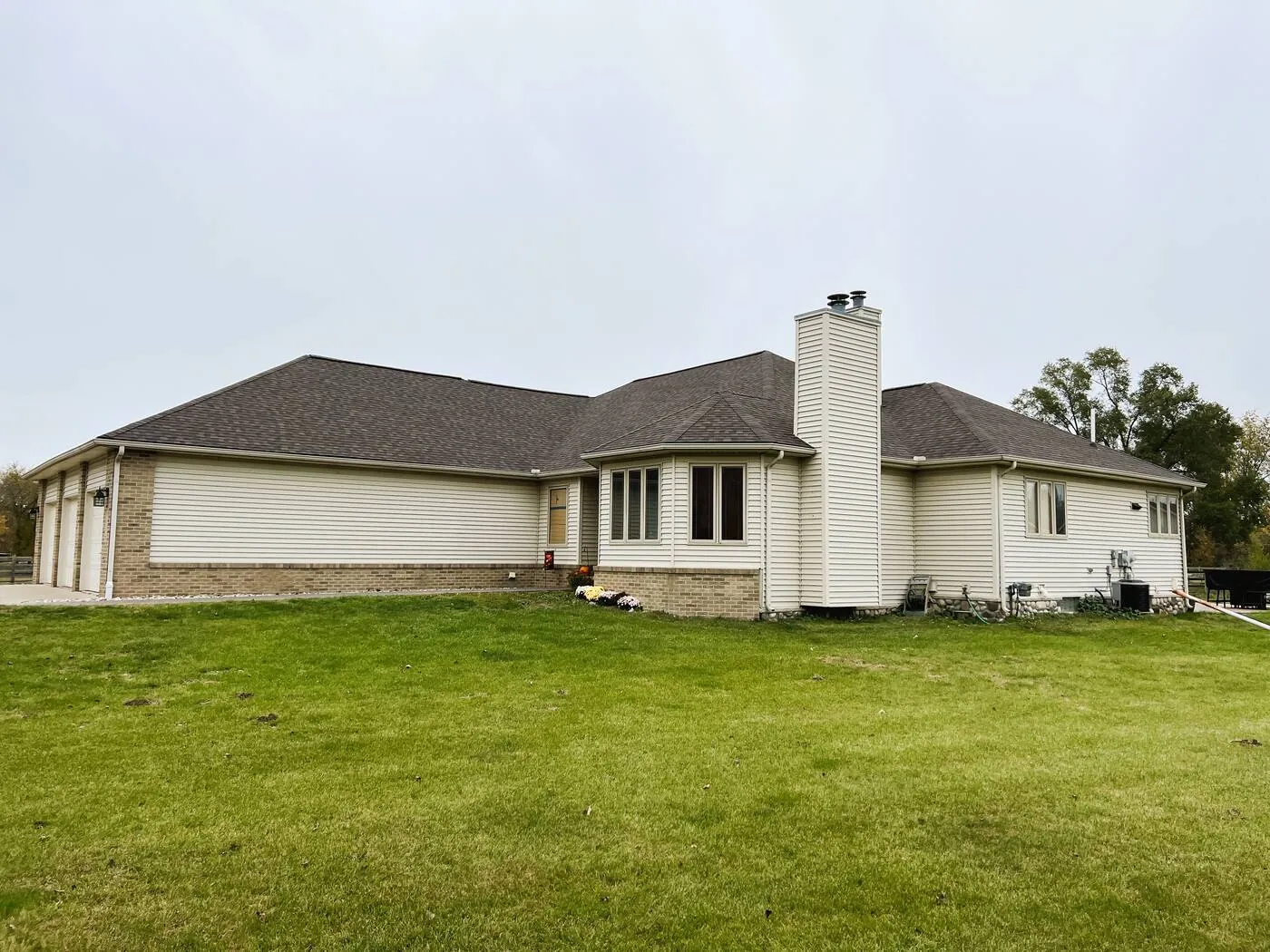
The fascia is the long board that runs along the edge of your roof where the gutters hang, and the soffit is the panel underneath the roof overhang that closes it in. Together they protect the ends of the rafters from weather and animals, and the soffit is usually where your attic breathes in fresh air. When either one fails, the problem rarely stays small, because the roof edge and the attic both depend on them.
What the fascia does
The fascia caps the ends of the rafters or trusses. It gives the drip edge something to lap over, it closes the end of the roof to weather, and on most homes it is what the gutters are fastened to. That last job is the one that matters most in Michigan. A gutter full of wet leaves, slush or ice is heavy, and all of that weight hangs on the fascia board. When the board softens, the gutter hangers loosen, the gutter tips, and water starts spilling behind it instead of draining away.
On many Livingston County homes the fascia is wood wrapped in aluminum. The wrap looks clean for decades, which is the good news and the bad news. Water that gets behind the wrap can rot the wood underneath without any visible sign until the board gives way.
What the soffit does
The soffit closes the underside of the overhang, keeping birds, bats, squirrels and insects out of the space above. On most homes built in the last few decades it is also vented, with perforated aluminum or vinyl panels or a continuous vent strip. That vented soffit is the intake half of your attic ventilation system.
A ventilated attic pulls cooler outside air in low at the soffits and lets warm, moist air out high near the ridge. The Michigan Residential Code sets the minimum in Section R806: a net free vent area of 1/150 of the attic floor, or 1/300 when 40 to 50 percent of that area is in upper vents within 3 feet of the ridge and the rest is low. It also calls for at least a 1-inch air space between the insulation and the roof deck at the vents, which is why baffles matter. In plain terms, the ridge vent can only exhaust as much air as the soffits let in. Our guide to attic frost, condensation and ventilation explains what happens when that balance is off.
Warning signs of soffit and fascia problems
- Peeling paint, dark stains or soft spots on the fascia board
- Gutters that sag, pull away from the house or overflow behind the back edge
- Aluminum fascia wrap that bulges, ripples or has come loose
- Soffit panels that sag, have dropped out or show water stains
- Holes or chewed edges in the soffit, which usually mean squirrels, birds or bats
- Soffit vents caked with paint, dirt or cobwebs, or covered by insulation from the attic side
- Frost on the underside of the roof deck or ice dams in winter, which often trace back to blocked intake
Why soffit and fascia fail in Michigan
Most fascia rot starts with water arriving from above. A roof edge with no drip edge, or one where the drip edge is too short, lets water run onto the top of the board every time it rains. Ice dams push meltwater under the bottom shingle course and onto the same spot. Clogged gutters overflow backward. Each of those is a roofing problem first and a fascia problem second, which is why replacing a rotted board without fixing the roof edge usually means replacing it again.
Soffits fail in different ways. On wooded lots around Pinckney, Hamburg and the west side of Howell, animals are the most common cause. Squirrels and raccoons work at loose panels looking for a warm place to spend the winter. Inside the attic, blown-in insulation that was never held back with baffles can bury the soffit vents completely, leaving a vented soffit that looks fine from outside and moves no air at all.
Repair or replace?
A single soft section of fascia, a few dropped soffit panels or one chewed corner can usually be repaired on its own. The question to ask is why it happened. If the roof edge is sending water onto the board, the repair needs to include the drip edge and the first few feet of the roof. If the soffits are vented but the attic is still frosting or the ridge is iced over, the fix is in the ventilation, not the panels.
When a roof is being replaced anyway, it is the best time to deal with the edges. The old shingles and drip edge are off, the fascia is fully exposed, and rotted wood can be cut out and replaced before the new drip edge goes on. We look at every fascia board and every soffit run during a roof replacement, and we confirm the soffit intake is actually open from the attic side before we install new ridge ventilation.
Can you just add more vents?
Adding exhaust vents without adding intake usually makes things worse, not better. A roof with a ridge vent, a couple of box vents and a gable vent can end up pulling air from the wrong places, including warm, damp air from the living space. The goal is balance: open intake at the soffits, one type of exhaust up high, and a clear path for air between them. That is the approach in the Owens Corning ventilation products we install as part of a complete roofing system.
Soffit and fascia questions
What is the difference between soffit and fascia?
The fascia is the vertical board on the edge of the roof where the gutters attach. The soffit is the horizontal panel underneath the overhang that closes it in and usually provides attic intake air.
Are soffit and fascia part of the roof?
They are part of the roof edge, and a good roofer treats them that way. Fascia condition affects how the drip edge and gutters perform, and soffit intake affects how long the shingles last.
Do all soffits need to be vented?
Most vented attics rely on soffit intake. Some homes with very short overhangs or cathedral ceilings use other intake methods, which we look at case by case.
Can rotted fascia cause a roof leak?
Rotted fascia is usually the result of water at the roof edge rather than the cause of a leak, but it often means the edge of the roof deck is soft too, and that does affect the roof.
Have the edges and the attic checked together
We inspect the roof, the fascia, the soffits and the attic side of the ventilation as one system, because that is how they work. The inspection is free and you get our findings in writing with photos. On Top Roofing is an Owens Corning Platinum Preferred Contractor serving Howell, Brighton, Hartland and Greater Southeast Michigan, and our inspectors are also HAAG Certified. Call (810) 588-3933 for your free estimate.