
Roofing blog
What a Roof Inspection Includes: A Michigan Homeowner's Checklist
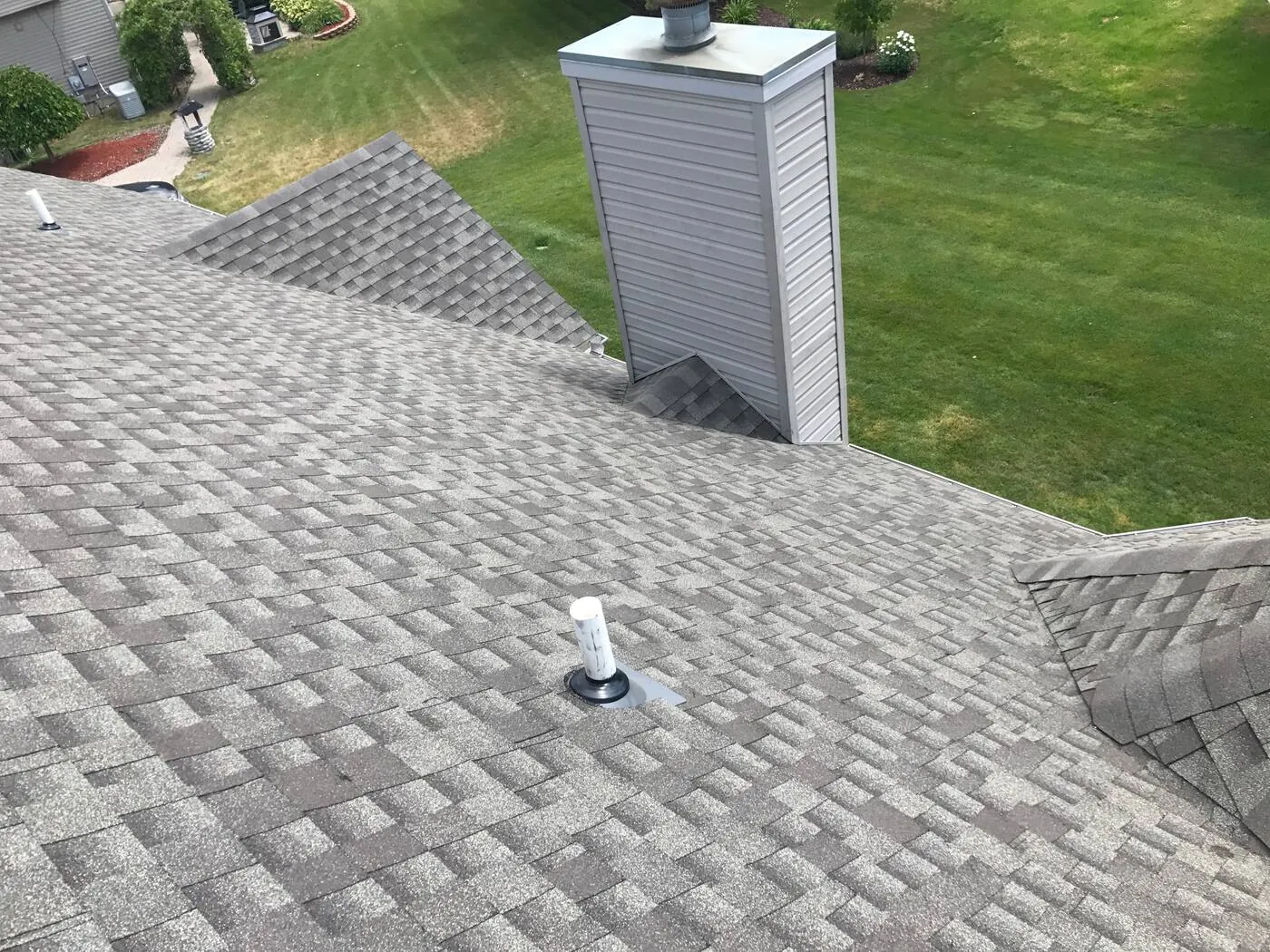
A thorough roof inspection covers the roof surface, every flashing and penetration, the gutters and edges, and the attic underneath, then ends with written findings and photographs. The National Roofing Contractors Association recommends inspecting a roof at least twice a year, preferably in spring and fall, and again after any severe storm. In Michigan, the fall inspection matters most.
That fall timing is not a sales line. A Michigan roof faces its hardest stretch from December through March, when freeze-thaw cycles, snow load and ice at the eaves find every weak spot. A loose flashing or a split pipe boot that would cause a small drip in September can cause a ceiling stain, wet insulation and soft decking by February. Finding it before the snow is the whole point.
This is what a complete inspection should look like, what you can check yourself from the ground, and what you should expect to receive at the end.
On the roof: the surface
The inspector walks the roof where it is safe to do so and looks closely at the shingles themselves:
- Granule loss. Asphalt shingles are covered in ceramic granules that protect the asphalt from sunlight. Bare, dark patches, or granules collecting in the gutters, mean the shingle is wearing out.
- Curling, cupping and clawing. Shingle edges that lift up or tabs that cup downward are signs of age, heat and often poor attic ventilation underneath.
- Cracked, creased or missing shingles. Wind lifts shingle tabs and can crease them along a line even when they settle back down. A creased shingle has broken its seal and will be the next one to go.
- Seal strip failure. On many roofs the inspector will gently test whether the shingles are still bonded to the course below. Unsealed shingles are vulnerable to the next strong wind.
- Hail and impact marks. Bruises, fractures in the mat and displaced granules in a pattern across the slopes. Telling hail damage from ordinary wear and from blistering takes training, which is why HAAG certification matters on storm-related inspections.
- Algae, moss and debris. Black streaks are mostly cosmetic. Moss growing in the shingle courses is not, because it lifts shingle edges. Leaves and needles collecting in valleys hold water against the roof.
- Soft spots and waviness. A spongy feel underfoot or a slope that is not flat often means the decking underneath has been wet.
On the roof: flashing and penetrations
Most roof leaks do not come through the middle of a slope. They come in where something interrupts the roof:
- Chimneys. Step flashing woven into the shingle courses, counter-flashing set into the mortar, and the condition of the crown and mortar joints. Surface caulk smeared over the joint where the chimney meets the roof is a temporary fix that fails.
- Plumbing vent pipe boots. The rubber collars around vent pipes crack from sunlight, often well before the shingles wear out. A split boot is one of the most common leaks we find.
- Valleys. Where two slopes meet, all the water from both concentrates. The inspector looks at the valley metal or the woven or cut shingles and for debris buildup.
- Skylights. Flashing kits, seals and the condition of the curb.
- Walls and dormers. Where a roof meets siding, step flashing should run behind the siding at every shingle course, with a kick-out flashing at the bottom to direct water into the gutter rather than into the wall.
- Roof vents, exhaust caps and satellite mounts. Every hole in the roof is a potential leak. Old satellite dish mounts lag-bolted through shingles are a frequent source.
At the edges: gutters, drip edge and fascia
- Drip edge along the eaves and rakes, so water leaves the roof instead of wicking back into the fascia.
- Gutters and downspouts for clogs, sagging, separation from the fascia, and downspouts that dump water against the foundation.
- Fascia and soffit for rot, water staining and evidence of past ice dams, plus whether the soffit vents are actually open.
- The lowest few feet above the eave, which is where ice dams push water under shingles in Michigan and where decking rot usually starts.
Inside: the attic
A roof inspection that never looks in the attic misses half the story. From inside, the inspector looks for:
- Water stains, daylight or wet spots on the underside of the decking
- Frost, rust or dark rings on nail tips, which point to condensation rather than a roof leak
- Bath fan or dryer ducts that end in the attic instead of outside
- Insulation that is wet, compressed or blocking the soffit vents
- Whether there is balanced intake and exhaust ventilation
Our guide to attic frost, condensation and ventilation explains what those attic findings mean.
What you should get at the end
An inspection is only as useful as what you are told afterward. You should receive:
- Photographs of the slopes and details you cannot see from the ground, including anything flagged as a problem
- A plain-language summary of the roof's overall condition and an honest estimate of how many years of service it has left
- A clear recommendation: no action needed, specific repairs, or planning for replacement, with the reasoning behind it
- Priorities, so you know what should be handled before winter and what can wait
What you should not get is pressure. A good inspection sometimes ends with "your roof is fine," and that is a perfectly good outcome.
A checklist you can use from the ground
You do not need to climb a ladder to keep an eye on your roof. Twice a year, and after any major storm, walk around the house with a pair of binoculars and check:
- Are any shingles missing, lifted, curled or cracked?
- Are there dark patches where granules are gone, or piles of granules at the bottom of downspouts?
- Is there moss growing in the shingle courses?
- Do the chimney, skylights and vent pipes look tight, with no missing flashing or obvious caulk patches?
- Are the gutters attached, draining and free of plants?
- Is there any sag in the roofline or the ridge?
- Inside, any new stains on ceilings or around the tops of exterior walls, or a musty smell upstairs?
Anything on that list is a reason to have the roof looked at properly. Please do not walk the roof yourself, especially on a steep two-story home or when it is wet, frosty or covered in leaves.
When an inspection is especially worth it
- Every fall, before the first snow
- After a hail or windstorm, even if you see nothing from the ground. Hail bruising and creased shingles are often invisible from the yard. Our storm damage restoration team is HAAG Certified for exactly this kind of inspection.
- Before buying or selling a home. A general home inspector's note that the roof is "near the end of its service life" is a referral, not a finding. See our guide to buying or selling a home with an aging roof.
- When a roof passes 15 to 20 years, especially original builder-grade roofs on 1990s and 2000s subdivision homes
- Any time you see a stain on a ceiling, before the cause has a chance to spread
Frequently asked questions
How often should a roof be inspected?
The National Roofing Contractors Association recommends at least twice a year, preferably in spring and fall, plus after any severe weather. In Michigan the fall inspection, before winter, is the most important one.
How long does a roof inspection take?
For a typical single-family home, usually under an hour on site, longer for large or complex roofs or when the attic needs a close look.
Does an inspection include the attic?
It should. Many leaks, condensation problems and early decking damage are only visible from inside the attic.
What is the difference between a roof inspection and a home inspection?
A home inspector looks at the entire house and often views the roof from the ground or a ladder. A roof inspection by a roofing contractor is a closer look at the roof surface, flashing, decking and ventilation, with a specific recommendation.
What happens if the inspection finds a problem?
You get photographs and a written explanation. Small issues like a split pipe boot or a loose flashing are usually a straightforward roof repair. If the roof is at the end of its life, we will explain why and talk through a roof replacement on your schedule.
Schedule your inspection before winter
We inspect roofs across Livingston County and Greater Southeast Michigan at no charge, including the attic, and give you written findings with photographs. As an Owens Corning Platinum Preferred Contractor, BBB A+ Accredited and HAAG Certified, we will tell you plainly whether your roof needs anything at all. Call (810) 588-3933 or request your inspection with the form on this page.