
Roofing blog
What Is Roof Flashing, and Why Does It Leak?
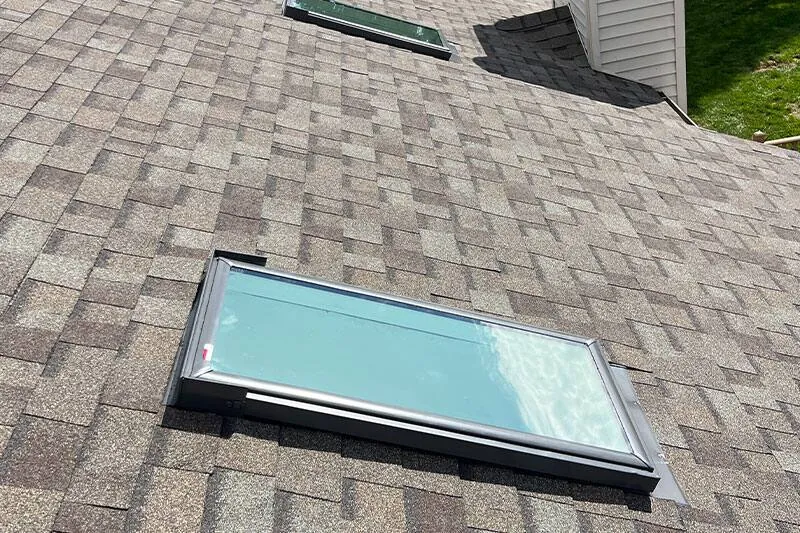
Roof flashing is the thin metal, usually galvanized steel or aluminum, installed wherever your roof meets something that is not a shingle: a wall, a chimney, a skylight, a vent pipe or another slope of roof. Its job is to steer water over those joints instead of into them. Most roof leaks we trace in Howell and across Livingston County start at the flashing, not in the middle of the shingles, which is why it is the first place we look on every inspection.
Why your roof needs flashing at all
Shingles do a good job on a plain, open slope. Water lands, runs downhill and drops into the gutter. The trouble starts wherever that flow is interrupted. A chimney, a dormer wall or a skylight is a seam, and seams are where water collects, backs up and finds its way in. Flashing bridges those seams with a layer of metal that is lapped so water always runs from one piece onto the next, never behind it.
Michigan weather makes those seams work harder than they would in a milder climate. Snow piles up against chimneys and dormer walls. Ice dams push meltwater back uphill at the eaves. Wind-driven rain off Lake Chemung or the Chain of Lakes comes in sideways. And a roof in Livingston County crosses the freezing line many dozens of times each winter, so the metal, the sealant and the wood around every joint keep expanding and shrinking. Flashing that is lapped correctly handles all of that. Flashing that depends on caulk usually does not.
The main types of roof flashing
Most homes in Howell, Brighton and Hartland have several kinds of flashing on one roof. Here is what each one does:
- Step flashing: small L-shaped pieces woven in with each course of shingles where a sloped roof runs along a wall, such as beside a dormer or a second-story wall. The Michigan Residential Code calls for each piece to be at least 4 inches high and 4 inches wide.
- Counterflashing: a second layer of metal that covers the top of the step or base flashing, usually set into the mortar joints of a chimney or tucked behind siding, so water cannot run down behind it.
- Chimney flashing: a combination of base, step and counterflashing that wraps the chimney on all four sides. Wider chimneys also need a chimney cricket on the uphill side.
- Valley flashing: metal or membrane lining the valleys where two slopes meet, which carry more water than any other part of the roof.
- Kickout flashing: a small diverter at the bottom of a roof-to-wall joint that turns water out into the gutter instead of letting it run down inside the wall. Code requires it where a roof eave meets a sidewall, and it is one of the most often missing pieces we find.
- Pipe boots and vent flashing: collars that seal around plumbing vents and exhaust pipes. We wrote a separate guide on why pipe boots fail.
- Drip edge: the metal at the eaves and rakes that keeps water from curling back onto the roof deck. See our article on drip edge for the details.
Why flashing fails on Michigan homes
Flashing metal itself lasts a long time. When it leaks, it is almost always because of how it was installed or what has happened to the materials around it. These are the causes we see most often:
- Reused flashing. On many roofs the old step and chimney flashing was left in place during the last reroof and the new shingles were simply tucked up against it. Old metal that has been bent, nailed and resealed rarely lies tight again.
- Caulk instead of laps. Roofing sealant smeared along a chimney or a wall line can look fine for a season or two. Then sun and freeze-thaw cycles crack it, and water follows the crack straight in.
- No kickout at a wall. Without that small diverter, water from the roof runs down the face of the siding and gets behind it. The damage often shows up first as stains or soft drywall inside, well below the roof.
- Loose counterflashing on chimneys. As mortar joints weather, the counterflashing set into them pulls loose, and wind-driven rain gets behind it.
- Ice dams. Water backing up at the eaves gets under flashing at low walls and dormers that were never meant to hold standing water, especially where there is no ice and water barrier underneath.
- Rust and physical damage. Thin or uncoated metal rusts through over time, and branches, ladders and animals can bend or tear it.
Signs your flashing may be leaking
You do not have to climb onto the roof to spot most flashing problems. Look for:
- Water stains on a ceiling or wall near a chimney, skylight or where a lower roof meets a second-story wall
- Damp or stained wood in the attic around the chimney, a vent pipe or a dormer
- Streaks or peeling paint on siding below the bottom of a roof-to-wall joint
- Thick beads of caulk or roofing tar along the chimney or wall line, which usually means someone has patched it before
- Counterflashing that has pulled away from the chimney, or gaps you can see from the ground
- Leaks that show up only in wind-driven rain or during a winter thaw
Can flashing be repaired, or does it need replacing?
It depends on the rest of the roof. If the roof is in good shape with plenty of life left and the problem is one spot, such as a loose piece of counterflashing or a missing kickout, a targeted roof repair is usually the right answer. A proper repair means lifting the shingles around the area, replacing the flashing with new metal lapped the right way and re-shingling, not adding another layer of caulk on top.
If the shingles are near the end of their life, it makes more sense to replace the flashing as part of a new roof. Step flashing is woven into the shingle courses, so it cannot be fully replaced without removing those shingles anyway. On every roof replacement we install new step flashing, new pipe boots, new valley protection and kickout flashing where the code calls for it, and we reset or replace chimney counterflashing. Reusing old flashing is one of the most common reasons a brand new roof leaks, and it is a shortcut we do not take.
Flashing and your roof warranty
Flashing is part of the roofing system, not an add-on. As an Owens Corning Platinum Preferred Contractor, we install complete Owens Corning systems, with ice and water barrier at the eaves, in the valleys and around chimneys and walls, so the flashing has a sealed layer beneath it as a backup. That full-system approach is what lets us register the strongest Owens Corning warranty coverage in your name. A roof with reused flashing or caulked joints is the kind of installation that causes trouble later, no matter how good the shingles are.
Roof flashing questions
How long does roof flashing last?
Good metal flashing can last as long as the roof, often longer. In practice it is replaced whenever the roof is replaced, because step flashing is woven in with the shingles and old metal rarely seals tight a second time.
Can I just caulk my flashing to stop a leak?
Caulk can slow a leak for a short time, but it is not a fix. Sealant cracks under sun and Michigan freeze-thaw cycles, and the leak returns. A lasting repair replaces or resets the metal so water is shed by the overlaps, not held back by caulk.
Why does my roof only leak around the chimney in winter?
Snow piles up on the uphill side of a chimney and melts during the day, then refreezes at night. If the flashing or cricket is not right, that meltwater finds its way behind the metal. It is one of the most common winter calls we get in Howell, Brighton and Hartland.
Get your flashing checked before winter
If you have a stain near a chimney, skylight or wall, or your roof has never had its flashing looked at, now is a good time, before snow starts piling up. Our roof inspections are free in Howell, Brighton, Hartland, Fowlerville, Pinckney and across Greater Southeast Michigan, and we show you photos of every flashing detail we find. Our inspectors are HAAG Certified. Call On Top Roofing at (810) 588-3933 or request your free estimate.