
Roofing blog
7 Ways Michigan Weather Affects Your Roof's Lifespan
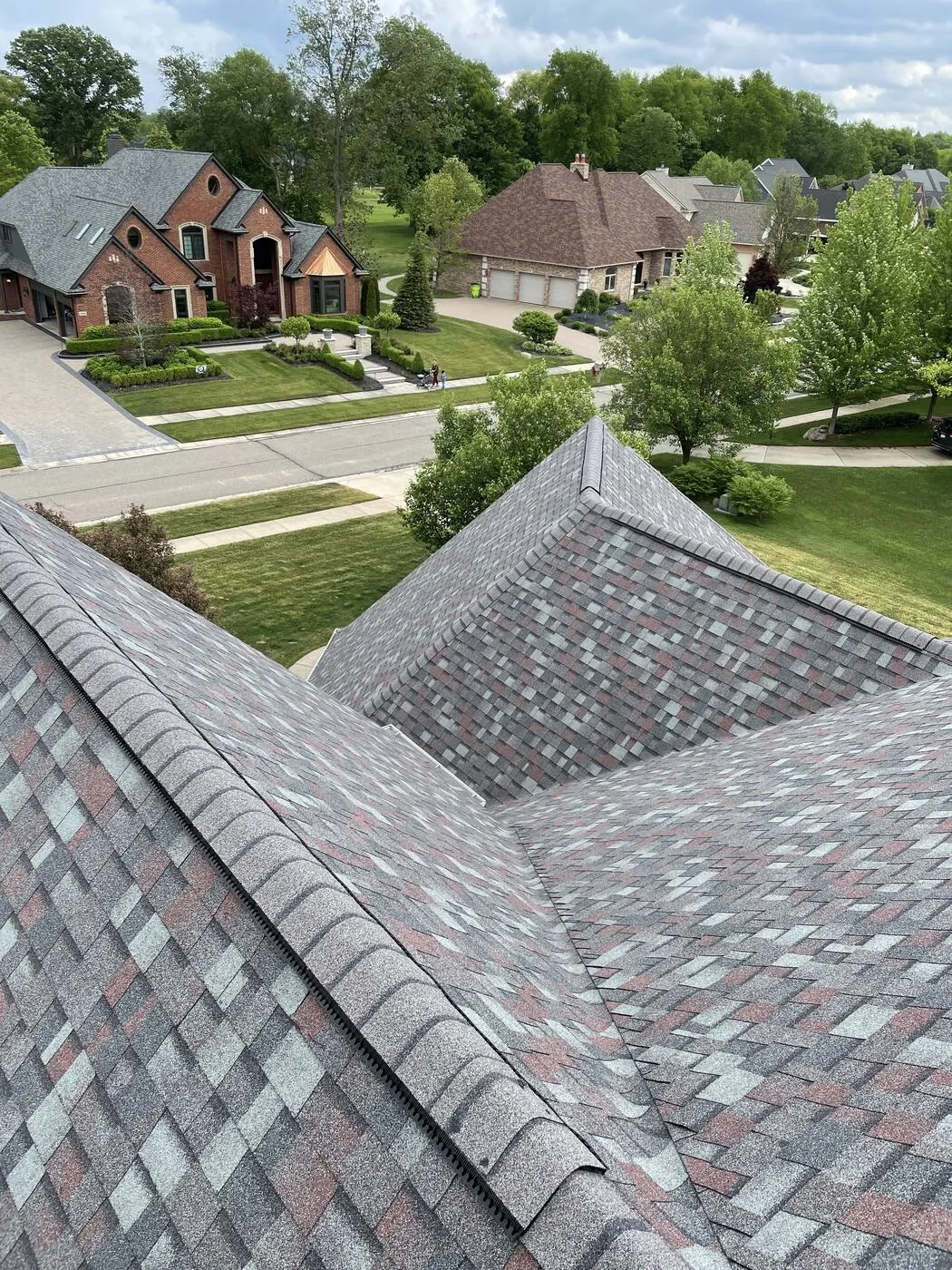
Most asphalt shingle roofs in Howell and across Livingston County last somewhere around 20 to 25 years, and a well-installed, well-ventilated architectural shingle roof can go longer. Where a roof lands in that range depends less on the label on the shingle bundle and more on what Michigan weather does to it every year, and on whether the roof was built to handle it.
Here are the seven weather forces that age roofs in Greater Southeast Michigan the fastest, what each one does, and what actually helps a roof last.
How long does a roof last in Michigan?
Typical service life by material, for homes in our climate:
- Asphalt shingles: about 20 to 25 years for most builder-grade roofs, longer for architectural shingles that are installed as a complete system with good ventilation.
- Metal roofing: 40 years or more, and it sheds snow well.
- Cedar shakes: around 20 to 30 years with regular upkeep, less on shaded, damp lots.
- Slate: 75 years or more when it is installed and maintained by someone who knows slate.
Most homes we work on in Howell, Brighton, Hartland and Fowlerville have asphalt shingles. Many of the 1990s and 2000s subdivisions are on their original roof and are now right in the replacement window. We wrote a separate guide for replacing the first roof on a 1990s or 2000s home.
1. Freeze-thaw cycles
Michigan winters do not stay frozen. The roof crosses the freezing line again and again, and any water that has worked into a crack, a lifted tab or a seam freezes, expands and opens the gap a little wider each time. On a sound roof this does very little. On an older roof it is the single biggest reason shingles, sealant and flashing give out. Our guide to frost damage on Michigan roofs covers it in more detail.
2. Ice dams
When heat from the house warms the roof deck, snow melts, runs down to the cold eaves and refreezes into a ridge of ice. Meltwater backs up behind it and gets under the shingles. Repeated every winter, that soaks the underlayment and decking along the eaves, which is why soft, rotted sheathing at the bottom edge of the roof is one of the most common things we find on tear-offs. See how to prevent ice dams.
3. Snow load
Healthy roofs are built to carry our normal snow, but weight builds up when snow sits all winter, packs down, gets rained on or turns to ice. Low-slope porches, valleys and lower roofs below taller ones collect the most. Snow load is rarely what ends a roof's life on its own, but it adds stress to framing and decking that is already weakened by moisture. Read more about how much snow a roof can hold.
4. Wind
Strong gusts get under shingle edges, break the sealant strips that hold each course down and can lift or tear shingles off. The damage is not always visible from the ground: a shingle whose seal has broken can look fine and then blow off in the next storm. Livingston County took gusts estimated at 70 mph in Howell during the September 2026 storms. If your roof went through that, our September 2026 windstorm roof check explains what to look for.
Roof shape matters here too. Hip roofs generally handle wind better than gable roofs, which we explain in hip roof vs. gable roof.
5. Hail
Hail bruises asphalt shingles, knocks granules loose and can crack the mat underneath, even when the shingle still looks whole from the yard. Bruised shingles age faster because the asphalt is exposed to sun and water. After a hailstorm, a proper inspection checks the shingles, vents, gutters and soft metals for impact marks. Here is how a hail inspection works.
6. Summer sun and heat
Michigan summers are short, but a dark roof on a sunny July afternoon gets far hotter than the air. Heat and UV slowly dry out the asphalt, and the protective granules wear away over time. A hot, poorly ventilated attic bakes the shingles from below as well, which is one reason attic ventilation matters in summer as much as in winter.
7. Moisture, shade and humidity
Wooded lots and north-facing slopes stay damp longer, and that is where moss and algae grow and where wood decking is most likely to rot. Humid air leaking into the attic can also condense on the underside of the roof deck. Our article on black streaks and moss explains what is cosmetic and what is not, and tree debris adds to the problem by holding moisture against the shingles.
Signs your roof is near the end of its life
- Shingles that are curling, cupping, cracked or lifting. See what each one means.
- Granules collecting in the gutters or at the downspouts
- Missing shingles after ordinary storms
- Leaks or ceiling stains, especially during winter thaws
- A roofline that dips or looks wavy
- Daylight or damp spots visible from the attic
- The roof is 20 or more years old and has never been replaced
One sign on its own does not always mean replacement. If you are not sure whether to fix or replace, our guide on repair vs. replacement walks through how we decide.
How to get more years out of your roof
- Have it inspected every fall, and after any major wind or hail storm.
- Keep gutters and downspouts clear so water and meltwater can drain.
- Make sure the attic has balanced intake and exhaust ventilation and enough insulation. Here is why ventilation and insulation matter.
- Fix small problems like a cracked pipe boot or a lifted shingle right away, before water gets underneath.
- Trim branches back from the roof.
- Use a roof rake from the ground after heavy snow, and stay off an icy roof.
Building a roof that lasts in Michigan
The longest-lasting roofs we see are not the ones with the fanciest shingle. They are the ones installed as a complete system: ice and water barrier at the eaves and in the valleys, new flashing at every wall and chimney, balanced ventilation and shingles nailed in the manufacturer's nailing zone. That is how we approach every roof replacement.
As an Owens Corning Platinum Preferred Contractor, we install complete Owens Corning systems and can register a Platinum Protection Roofing Limited Warranty in your name, with limited lifetime coverage on materials and long-term workmanship coverage. Only Platinum Preferred contractors can offer it. Learn more about what Platinum Preferred means.
Roof lifespan questions
How long does a shingle roof last in Michigan?
Most asphalt shingle roofs here last about 20 to 25 years. Architectural shingles installed as a complete system with good attic ventilation can last longer, while a poorly ventilated roof or one with two layers of shingles often wears out sooner.
What shortens a roof's life the most in Michigan?
Freeze-thaw cycles and ice dams do the most damage, because they keep forcing water into and under the shingles all winter. Poor attic ventilation makes both worse.
Does a metal roof last longer than shingles in Michigan?
Yes. A metal roof typically lasts 40 years or more and sheds snow well. Asphalt shingles remain the most common choice on Livingston County homes, and a well-built shingle roof is a reliable, long-lasting option. We compare the two in metal roof vs. shingles.
How do I know how old my roof is?
Check your home purchase paperwork, any permit records from your city or the county building department, or ask the previous owner. If none of those help, a roofer can usually estimate the age from the shingle type and wear during an inspection.
Find out how much life your roof has left
The best way to know is to have someone look. Our roof inspections are free in Howell, Brighton, Hartland, Fowlerville, Pinckney and across Greater Southeast Michigan, and you get a written recommendation with photos. Our inspectors are HAAG Certified. Call On Top Roofing at (810) 588-3933 or request your free estimate.